Last updated November 22, 2026
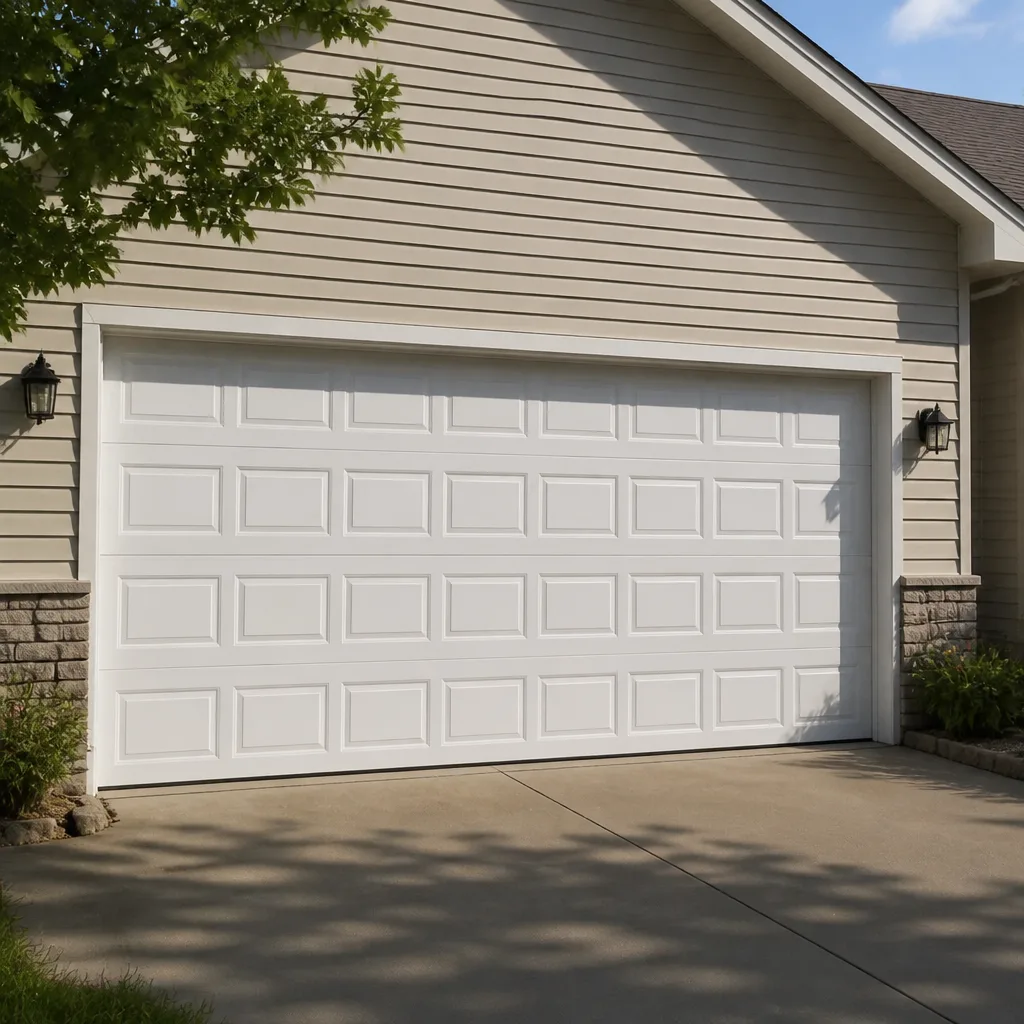 Raised-panel steel
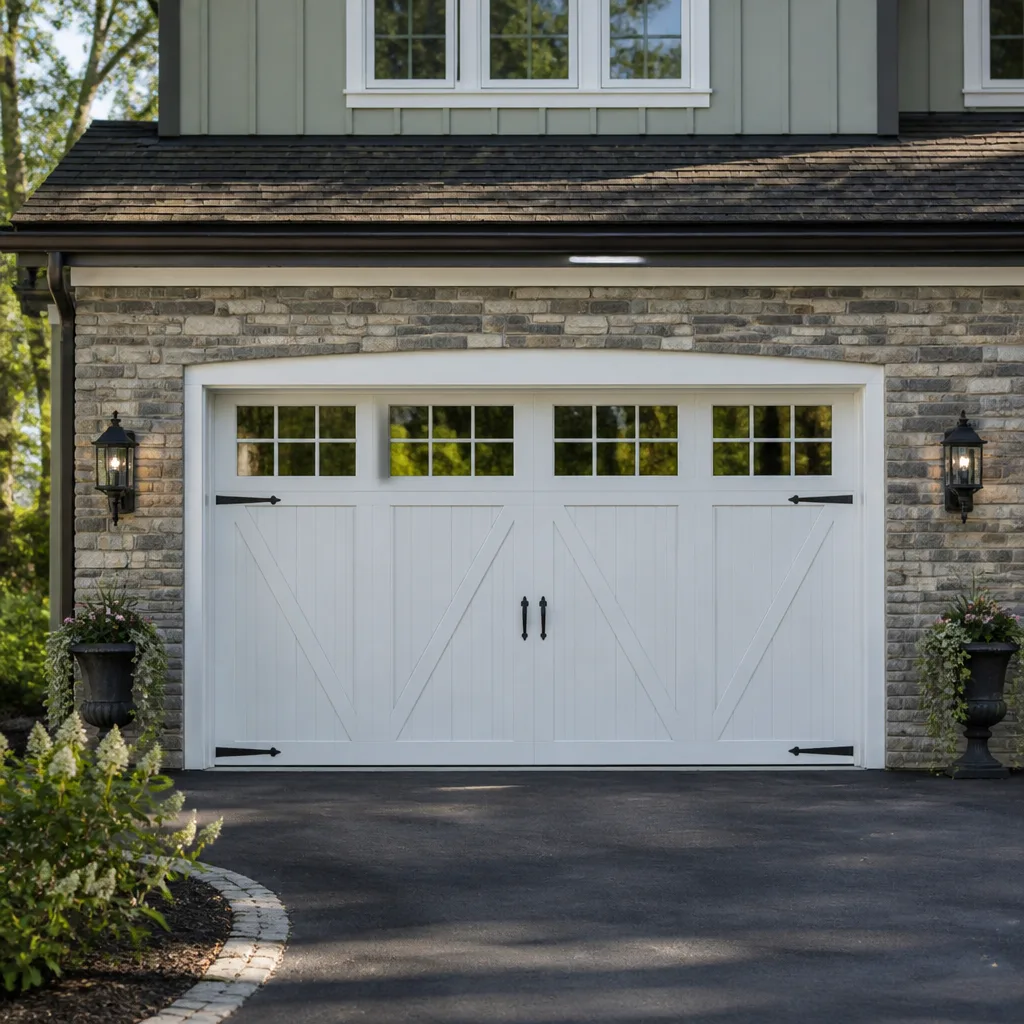 Carriage house
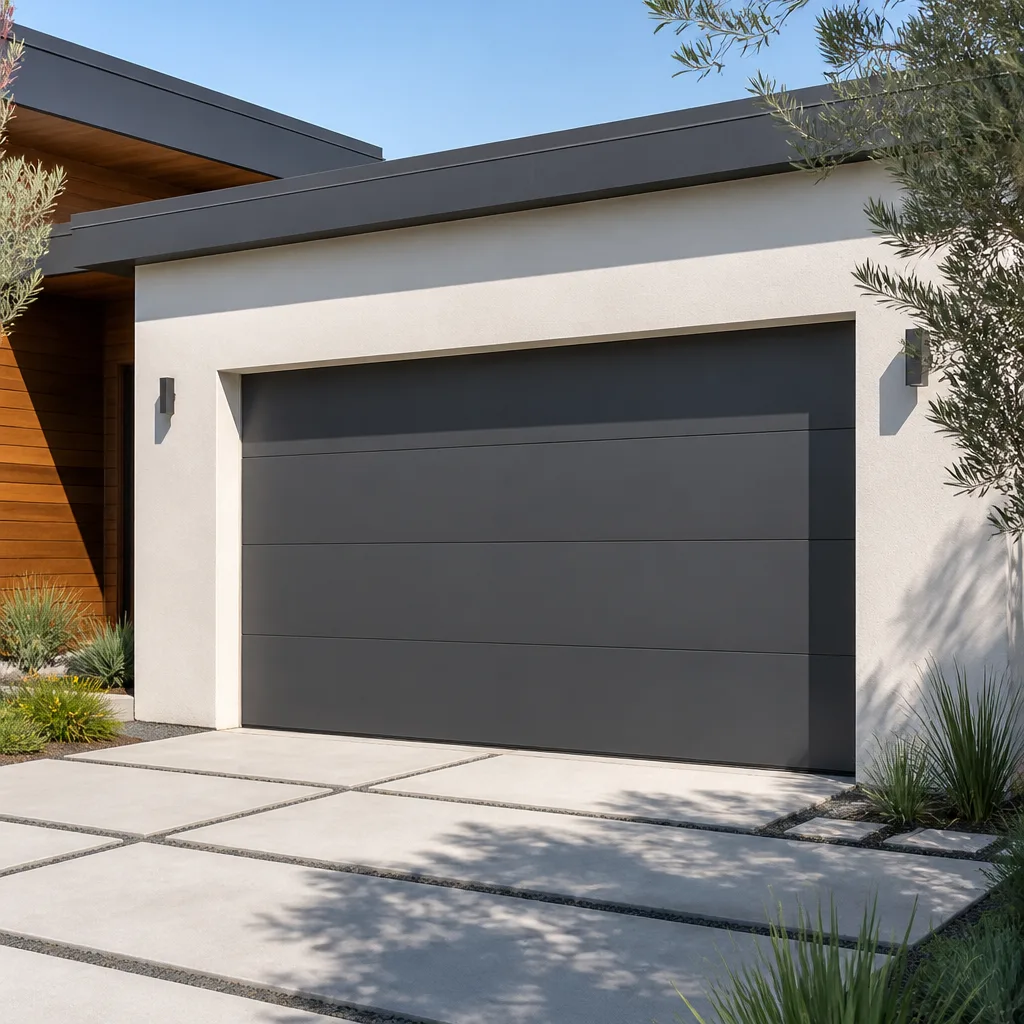 Modern flush
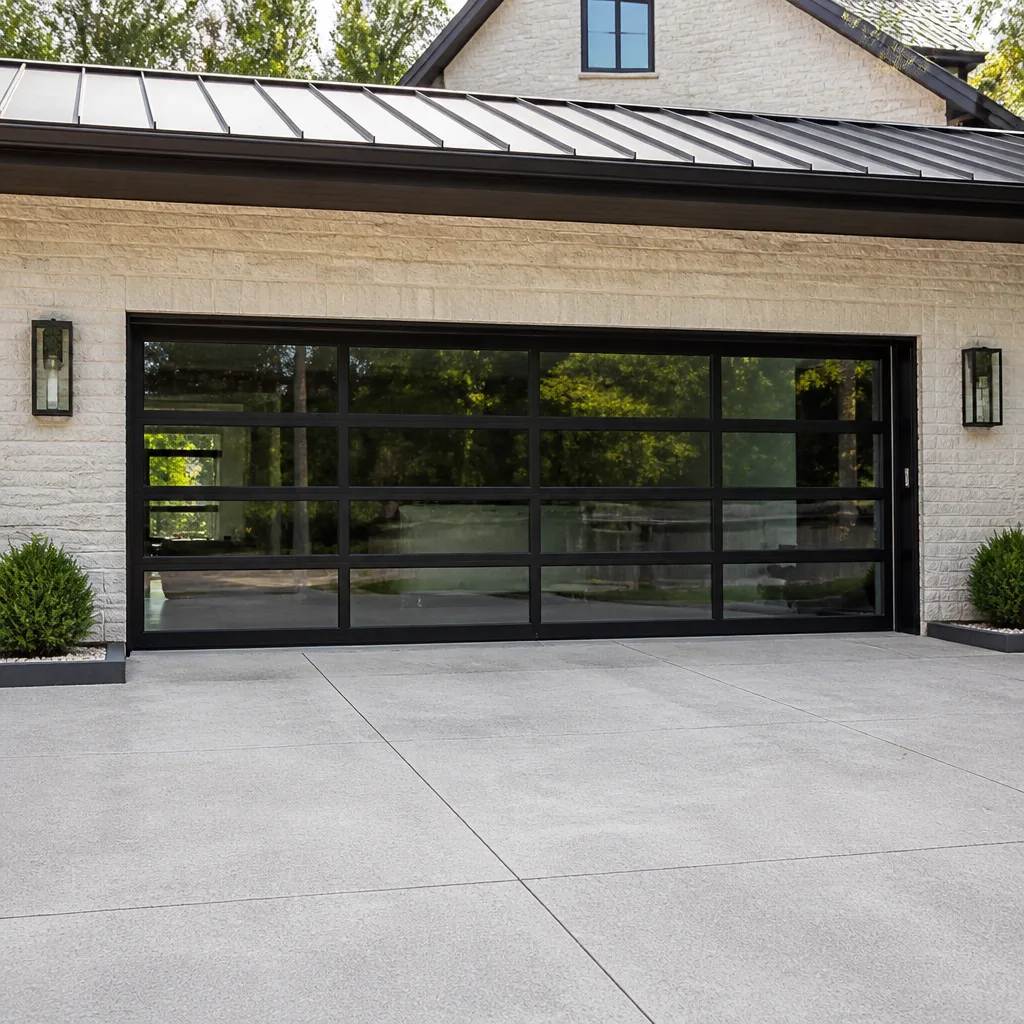 Full-view glass
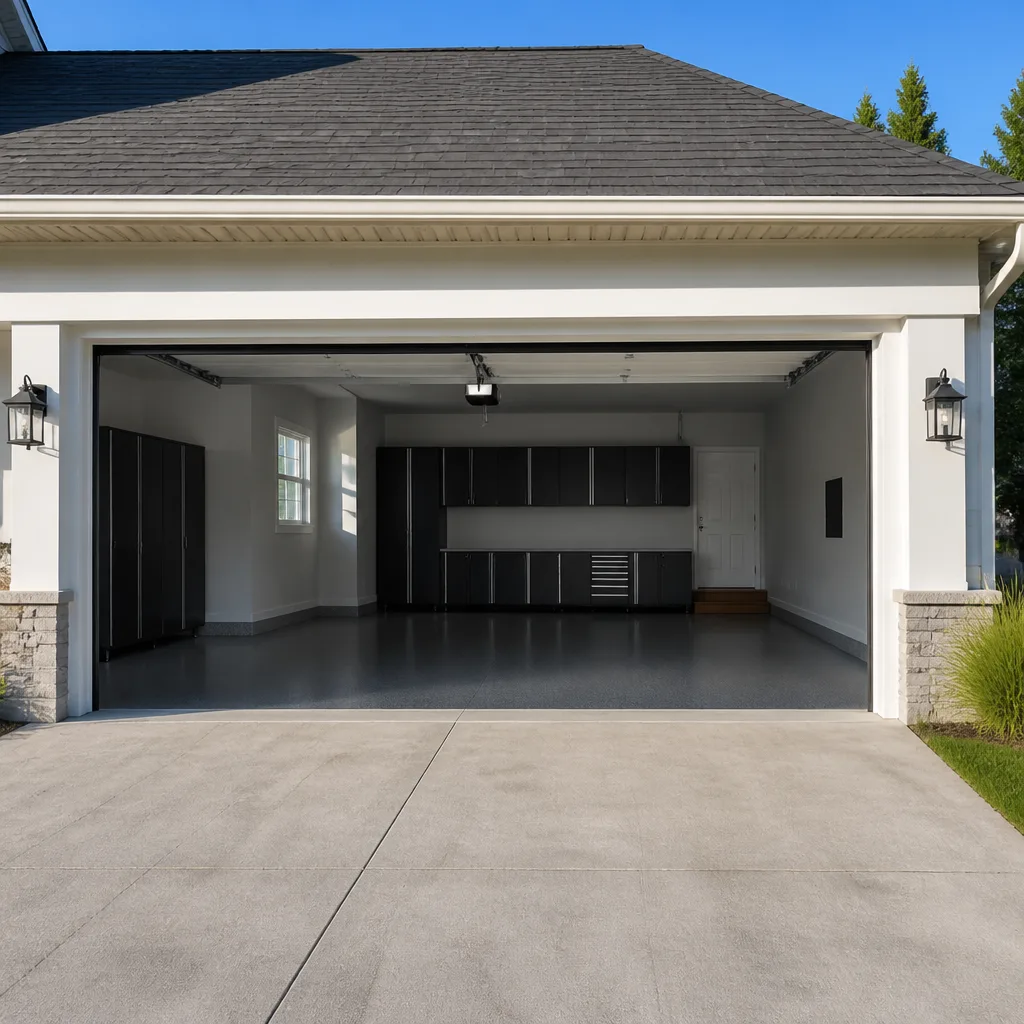 LiftMaster openers
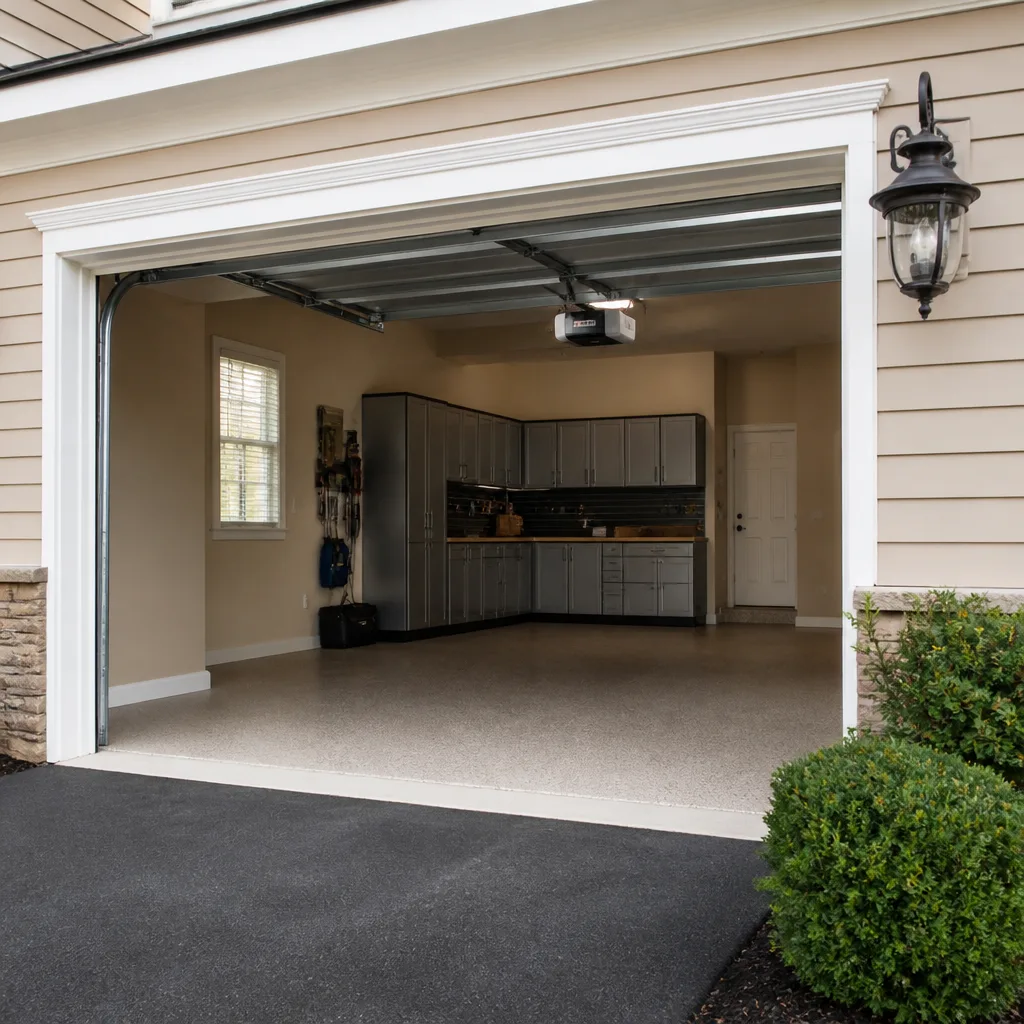 Chamberlain openers
Full 25-point door and opener safety check with every visit - springs, cables, rollers, tracks, and your LiftMaster or Chamberlain opener included
You get a price before we start. It does not change when the pro arrives.
Get your free estimateSeasonal Garage Door Care for Riviera Bay: Year-Round Homeowner’s Guide
Telling a Riviera Bay homeowner to “winterize” the garage door is bad advice. We don’t get a hard freeze here, so the fall ritual most national checklists describe doesn’t map onto Pinellas County. What we actually get is a dry season, a hurricane season, and two shoulder periods, each with its own stress pattern on springs, openers, and seals. This guide breaks the year into the windows that matter in Riviera Bay and tells you what to check, test, and service in each one. You’ll finish knowing what to do in May, what to watch in August, and what most homeowners here forget in January.
Quick Answer
Garage door maintenance in Riviera Bay follows Florida’s weather calendar, not the four-season model: service and test everything in May before hurricane season opens, watch springs and openers through the June-to-September heat, do a post-storm inspection after any named system or severe thunderstorm, and use the November-to-April dry season for hardware checks and lubrication. Two tune-ups a year – one before storm season and one in mid-dry-season – keep most doors running through the whole year.
Styles & brands we work with
- Raised-panel steel
- Carriage house
- Modern flush
- Full-view glass
- LiftMaster openers
- Chamberlain openers
Table of Contents
- Why the Florida Calendar Beats Generic Seasonal Advice
- Pre-Hurricane Season Checklist (May)
- Mid-Summer Heat and Humidity (June-September)
- Post-Storm Inspection Priorities
- Dry Season: The Deceptive Low-Maintenance Window (November-April)
- Annual Tasks Tied to Florida’s Calendar
- What Your Brand Needs Through the Year
- Riviera Bay Neighborhood Notes
Why the Florida Calendar Beats Generic Seasonal Advice
Most garage door guides are written for a climate with four distinct seasons. They tell you to prep for freezing in October and to expect a spring thaw. Neither applies in Riviera Bay, and following that advice means you service the door at the wrong time. The stresses on a garage door in Pinellas County come from heat, humidity, wind, and the long dry stretch – not from ice or a hard winter.
Here’s what actually stresses a garage door in Riviera Bay across a year:
- Heat: Afternoons above 90°F are routine from June through September, and a closed garage with a west-facing door gets hotter than the outside air. Torsion springs, opener motors, and vinyl seals all feel that.
- Humidity: The summer wet season pushes humidity high day after day. Wood door panels swell, metal hardware corrodes faster, and tracks can pick up grit that turns into drag.
- Wind: Hurricane season runs June 1 through November 30. Even storms that stay offshore send gusts strong enough to flex a lightweight door and test how well it’s anchored.
- The dry season: November through April is genuinely easier on the door. That’s the trap. Nothing complains, so nothing gets checked, and small wear keeps advancing.
That’s four distinct pressure patterns, and they don’t line up with spring, summer, fall, and winter. In our experience, a Riviera Bay door that gets a May tune-up and a dry-season inspection lasts better than one that gets a generic annual service in a month that means nothing here. The Garage Door Repair Riviera Bay team works on doors across this climate all year, and the calendar below is what we’d hand a neighbor.
Pre-Hurricane Season Checklist (May)
May is the most important month on the Riviera Bay garage door calendar. Hurricane season opens June 1, and a door that’s going to fail under wind load is far easier and cheaper to fix in calm weather than after a storm. This is also the last window before the summer heat arrives, so you’re servicing the door before the hard months, not during them.
Run through this in order:
- Test the balance. Disconnect the opener, lift the door by hand to about waist height, and let go. A balanced door stays put. One that drops or rises on its own is telling you a spring is weak or the tension is off, and that’s a repair to handle before storm season, not a waiting item.
- Check the anchor points. Look at where the vertical track brackets attach to the wall and where the torsion bar mounts above the door. Loose lag screws or brackets pulling away from framing are a wind-vulnerability problem, and May is when you want to find them.
- Inspect panels and hinges. Any panel that’s already cracked, dented, or separating at the seams will flex more under wind. Hinges that are loose or worn let panels shift.
- Test the weather seal. The bottom seal and side jambs should make contact all the way around. A seal that’s cracked or pulling away lets wind-driven rain in and gives wind a place to grab.
- Test the opener’s safety reverse. Put a piece of wood on the floor under the door and close it. The door should reverse on contact. Then test the photo-eye safety sensors by blocking the beam while the door is closing.
- Lubricate and tighten. Garage door lubricant on hinges, rollers, and the spring, and a check that every bolt on the track brackets is snug.
- Clear the travel path. Anything stored near the track, and anything overhead near the door’s arc, needs to come out before storm season.
If the balance test fails or the anchors are loose, that’s the point to bring in a professional rather than push it to June. Spring work in particular belongs to a trained technician – more on that below. A pre-season garage door repair visit in May is far less stressful than an emergency call in August.
Mid-Summer Heat and Humidity (June-September)
This is the stretch where Riviera Bay doors work hardest. Days above 90°F drive the garage interior hotter than the outside temperature, and the effects show up in three places: springs, openers, and seals.
How heat affects torsion springs
Steel torsion springs are under constant tension, and heat cycles them. Through a Riviera Bay summer the spring expands and contracts with the daily temperature swing, and over a season that cycling adds up to metal fatigue. A spring that’s near the end of its life often fails on the hottest week of the year, and it usually fails loudly – a sharp bang from the garage. A snapped spring is genuinely dangerous to be near, and it’s not a repair to attempt yourself. When a torsion spring goes, the door becomes dead weight with nothing holding it up.
Opener performance in the heat
Openers mounted to the ceiling of a hot garage run hotter than they would in a cooler climate, and the electronics notice. Common summer symptoms in Riviera Bay include:
- The door reversing for no clear reason on hot afternoons.
- The opener stopping partway up or down, then working again later.
- Remote range dropping off, or a remote that works sometimes and not others.
- A motor that sounds strained or runs longer than it used to.
Some of these are heat-related and clear up when the garage cools. Others point to a failing logic board, a worn gear, or safety sensors that have drifted out of alignment. A proper garage door opener repair diagnosis separates the two, so you’re not replacing an opener that only needed its sensors realigned or its travel limits reset. We work on LiftMaster, Chamberlain, Genie, and Craftsman units regularly, so whichever system is already on your ceiling is the one we’ll diagnose.
Weather seals and humidity
Summer humidity is hard on the bottom seal especially. Vinyl and rubber seals get stiff, then crack, and a seal that’s stopped contacting the floor lets humidity and rain into the garage. Wood panels swell with the humidity and can bind against the jambs. That binding shows up as a door that drags or strains the opener – worth catching before it wears the opener out.
If your door is struggling through the summer, Garage Door Repair Riviera Bay technicians can check the whole system – springs, opener, seals, and balance – in one visit. When it’s not urgent, calling us before the door actually fails saves you the emergency.
Post-Storm Inspection Priorities
After a named storm or a severe thunderstorm passes through Riviera Bay, do a visual inspection before you run the door. Storm damage to a garage door often isn’t obvious from across the driveway, and running an opener on a door with a damaged track or a dislodged panel can turn a repair into a replacement.
Check these in order:
- Panels first. Look for dents, cracks, and seams that have separated. A panel that’s holding water or has come apart at the edge needs attention before the next cycle of the opener.
- Tracks and alignment. Look down the track from the side. It should be straight. A track that’s bent out of line from wind pressure or a shifted panel will make the door bind, and it needs to be straightened before the door runs.
- Anchor points and brackets. Re-check the wall brackets and torsion bar mounts as you did in May. Storms put real stress on these.
- Hinges and rollers. Look for cracked hinges and rollers that have jumped out of the track. These are often the first things to fail after a gust.
- The springs. Look at the spring above the door for a visible break or gap. If the spring is broken, do not run the opener. The door is unsafe to lift.
- The opener and sensors. After the door is confirmed sound, test the opener’s reverse and the safety sensors.
If the door won’t run correctly after a storm and you’re not sure why, that’s an emergency garage door service call rather than a wait-and-see. If a spring is visibly broken or a panel has come loose, don’t try to lift the door by hand – call a professional for a same-day diagnosis.
Dry Season: The Deceptive Low-Maintenance Window (November-April)
November through April in Riviera Bay is genuinely gentle on a garage door. Humidity drops, temperatures cool, and the daily thermal swing gets milder. The door stops complaining, and that’s exactly the problem. The dry season is when wear advances quietly because there’s nothing dramatic to notice.
What’s actually happening to a door through the dry months:
- Corrosion keeps moving. The hardware that got wet through the summer has already started to corrode. In the dry months the corrosion continues on the same parts, just more slowly, and loose metal parts get looser.
- Rollers wear silently. Nylon and steel rollers that have thousands of cycles on them keep wearing. The door still opens, so nothing alerts you until the roller finally fails and the door goes crooked.
- Lubrication dries out. The garage door lubricant applied in May is much thinner by November. The dry season is when you’ll actually notice the door running a little harder or squeaking.
- The seals lose their seal. Summer heat and sun have already done the damage to the bottom seal. Come dry season it’s stiff and no longer making contact, and you only find out when the first rain of spring pushes water in.
We’d treat November-to-April as the season to be proactive rather than reactive. This is the best time for a full inspection and tune-up, because it’s easy on the technician’s schedule and it catches the wear items before hurricane season next year. An accurate inspection in February or March gives you time to schedule any repair before the May crunch, and a door replacement planned in the dry season means the install happens in pleasant weather, not the middle of a July heat wave.
Annual Tasks Tied to Florida’s Calendar
Most of what a garage door needs is generic: test the reverse, lubricate the moving parts, tighten the hardware. But the timing is different here, so we’ve broken the annual cycle into Florida months instead of the spring/fall framing.
May: the pre-season tune-up
- Balance test and spring check.
- Anchor, bracket, and hinge inspection.
- Bottom seal inspection and replacement if worn.
- Opener safety-reverse and photo-eye testing.
- Lubricate rollers, hinges, torsion spring, and the opener rail.
June through September: monthly checks
- A quick balance test each month.
- Listen for new sounds – grinding, squealing, or a door that runs rougher than usual.
- Look at the bottom seal for cracking and pull-away.
- Test the safety sensors once a month; summer heat can drift their alignment.
October: watch the weather
- Test the opener’s reverse after any major storm.
- Treat the door as pre-storm on any named system; follow the post-storm inspection above.
November through April: the dry-season inspection
- Full hardware inspection – corrosion, wear on rollers, loose bolts.
- Fresh lubrication since the May application has thinned.
- Check the weather seals after a summer of heat and sun.
- Plan any larger repair or replacement now, before the May clip.
That’s the calendar. If you only do two things all year, do the May tune-up and the dry-season inspection. Everything else is quick monthly checks.
What Your Brand Needs Through the Year
Garage door systems vary, and knowing which brand is installed helps you know what to watch. We service every major residential system, and the seasonal behavior of each one is worth understanding.
Amarr and Clopay doors
These steel and composite doors hold up well to heat, but the panel edges and seams are where the summer cycles show. Check panel seams in the dry season, and keep the bottom seal in good shape through the summer humidity. Amarr doors with polyurethane insulation are slower to heat up, which helps in the summer but doesn’t remove the need for the May tune-up.
Wayne Dalton and Raynor systems
Wayne Dalton uses some proprietary track and hinge designs, and Raynor is known for heavier commercial-grade hardware. Both benefit from a lubrication schedule that matches the manufacturer’s guidance, since the moving parts are the ones that wear under Florida heat cycles. If your Wayne Dalton door uses a TorqueMaster-style spring inside a tube, spring inspection is best left to a technician who knows the specific system.
LiftMaster, Chamberlain, Genie, and Craftsman openers
These four cover most of the openers we see in Riviera Bay garages. All of them are tested on the same summer symptom checklist: reverse on hot afternoons, stopping partway, remote range drop-off. The fix varies by model and age, so a diagnosis matters before you replace anything.
Riviera Bay Neighborhood Notes
Riviera Bay is a small neighborhood on the Pinellas County peninsula, and its geography shapes the door-care calendar. Homes here are close to the water and the open sky, which means wind exposure through hurricane season matters even if a storm passes at a distance. Garage doors along the bay-facing blocks see higher wind loading on the front of the house, and the door is often the largest opening on that face.
Older housing stock in Riviera Bay also shows up in the doors – a mix of original wood doors and mid-century metal panels, along with newer replacement doors on homes that have been updated. On the older doors, the seasonal wear shows up in hinges and rollers first, and lubrication matters more. On newer doors, the opener and seals do the aging. If you’re not sure what’s on your house, a technician can identify the door and opener system on the first visit and build the maintenance calendar around what’s actually installed.
The climate in Riviera Bay is warm and humid rather than dry, and summer afternoons routinely reach 90°F and above. That’s the baseline for the summer section above – a pinellas-facing door in the sun gets hotter than the thermometer, and the spring, opener, and seal have to live with that through the whole season.
Common Mistakes to Avoid
- Following a northern maintenance calendar. If you’re servicing the door in October for a spring thaw that doesn’t happen in Riviera Bay, you’re inspecting at the wrong time of year and missing the actual peak stress months. Read the Florida calendar and schedule against it.
- Treating the dry season as “nothing to do”. The November-to-April stretch is gentle on the door, which lulls homeowners into skipping the inspection that would catch dry-season corrosion and worn rollers. That quiet window is the best time to service, not the time to ignore it.
- Ignoring a spring that looks fine. A torsion spring can be near failure and look normal. The balance test catches it. If the door doesn’t hold at mid-height, get it checked before the summer heat, not after.
- Using the door before a post-storm inspection. Running an opener on a door with a bent track or a dislodged panel turns a simple repair into a replacement. Inspect the panels and tracks first after any named storm.
- Lubricating the wrong parts. Never lubricate the track itself or the photo-eye lenses. Lubricate the torsion spring, the hinges, the rollers, and the opener rail as the manufacturer directs, and keep the track clean and dry.
- Waiting for the peak-season crunch. Spring and door replacements scheduled in May and June compete for the calendar. Booking a replacement or larger repair in the dry season avoids the wait.
- Skipping the monthly safety test. The safety-reverse test and photo-eye check take a minute and catch the failure that actually matters – the door that closes on a child or a pet. Do them monthly, not just in May.
See the difference
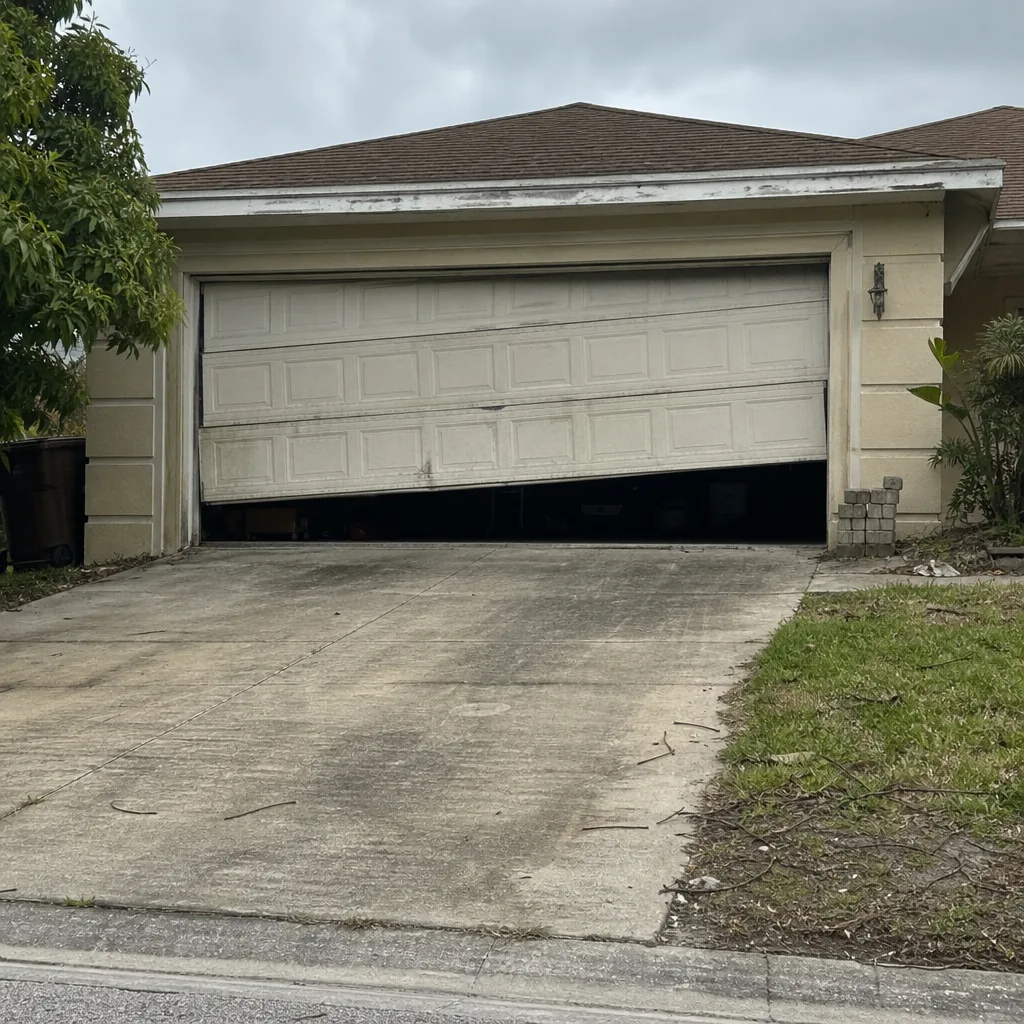 Before
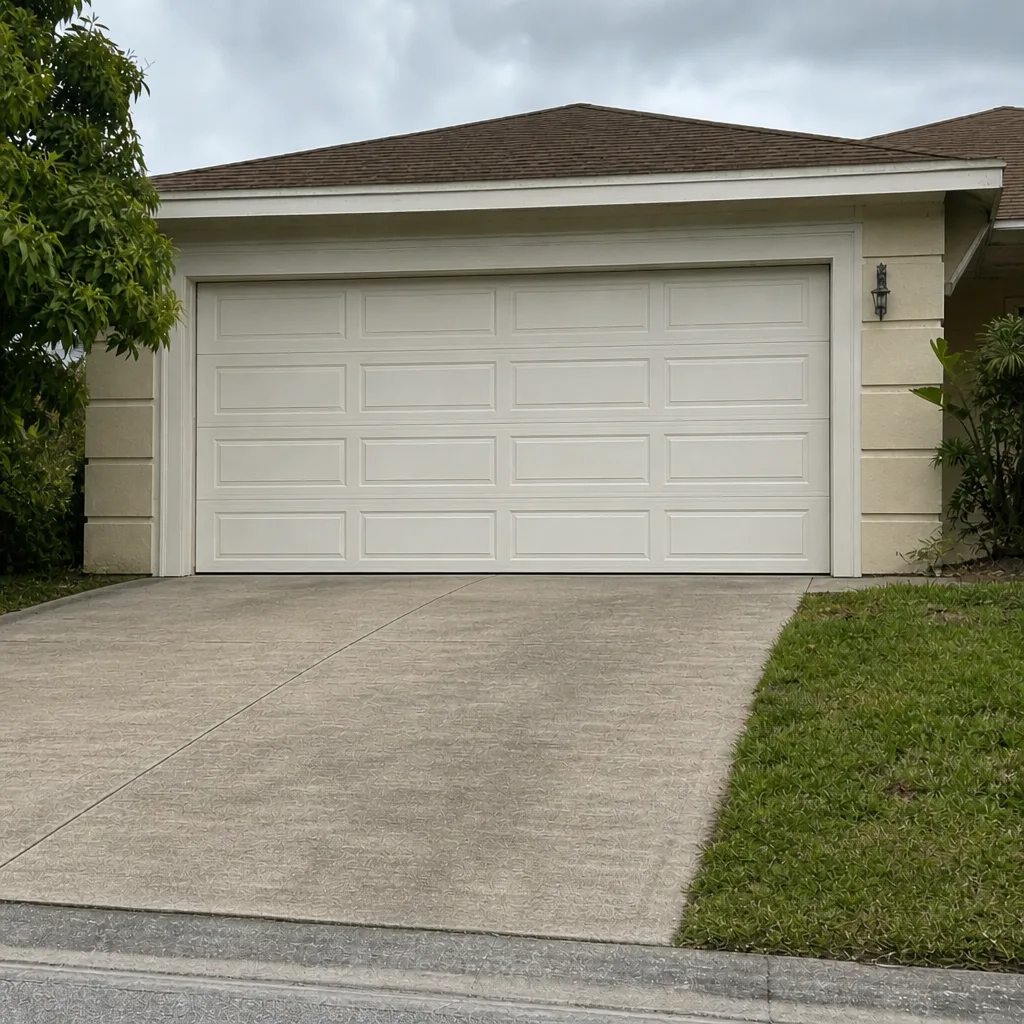 After
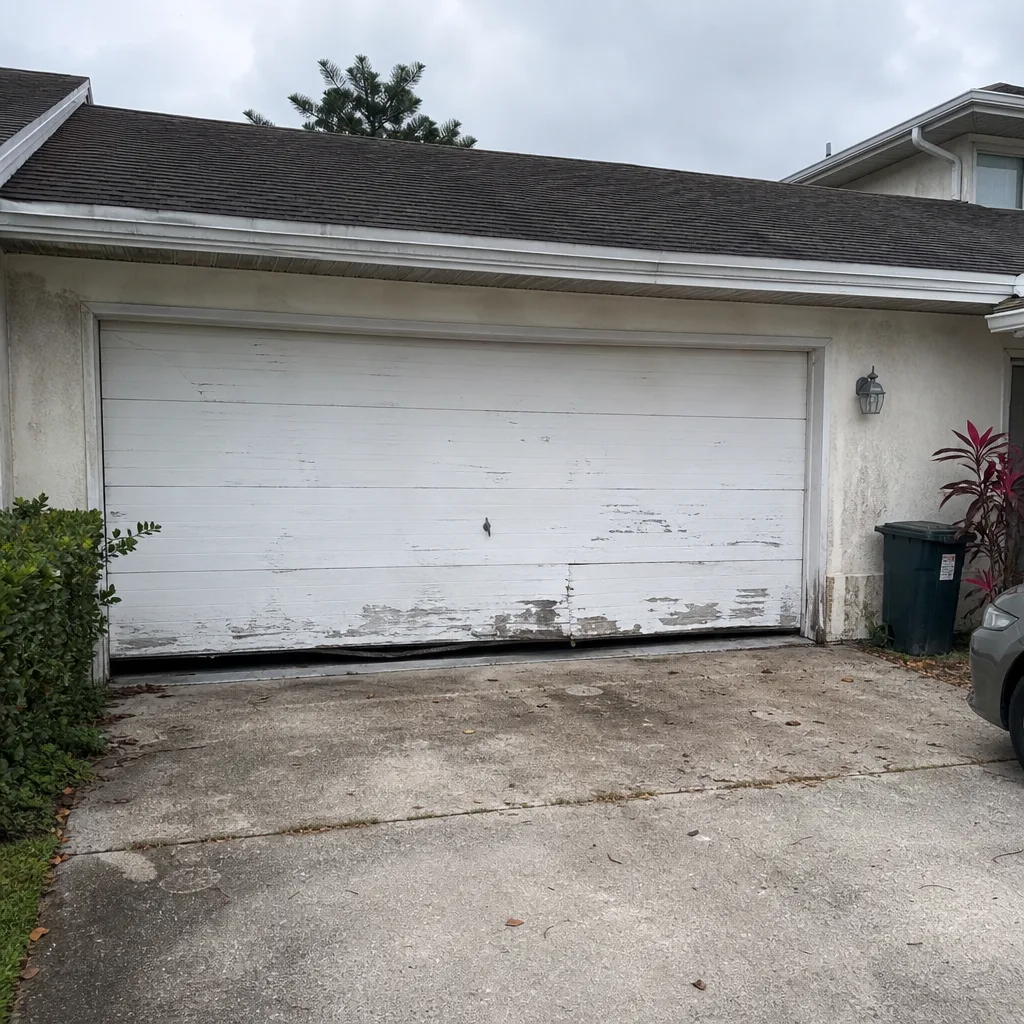 Before
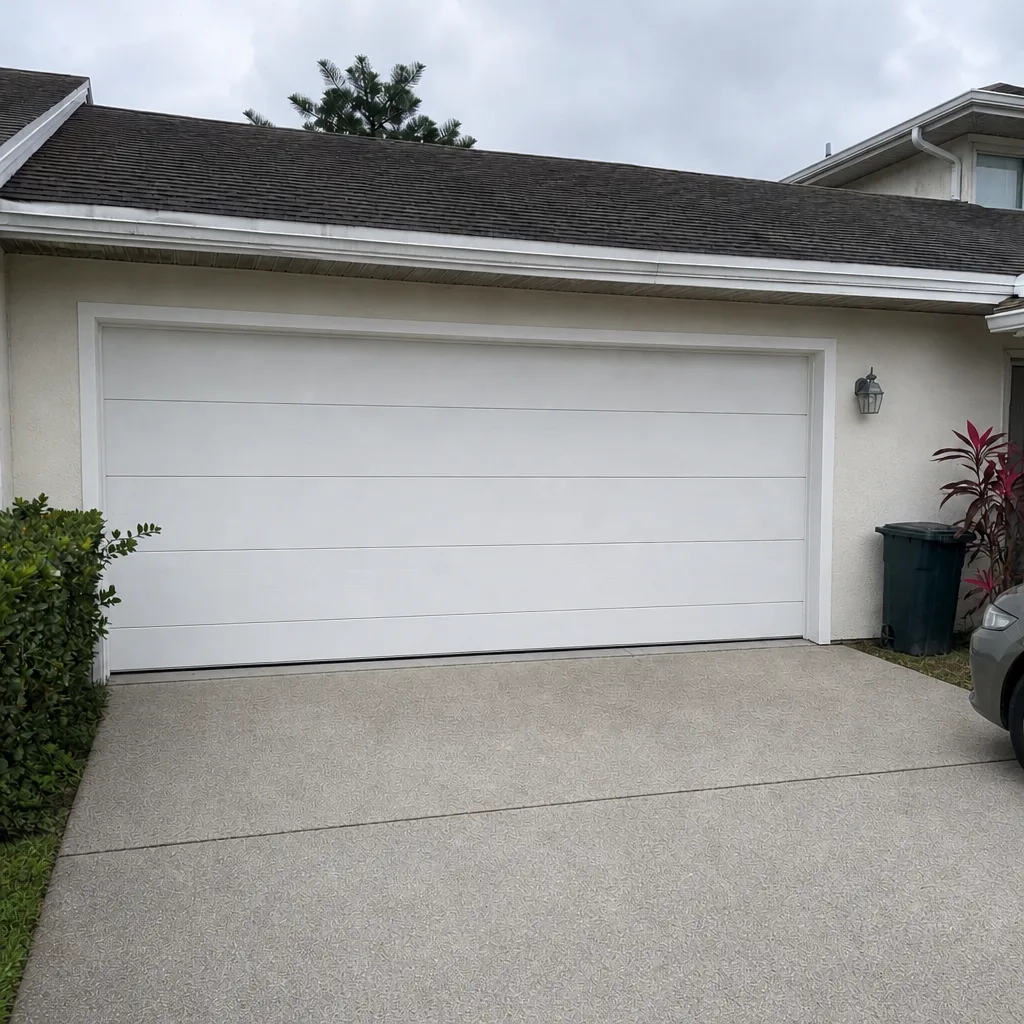 After
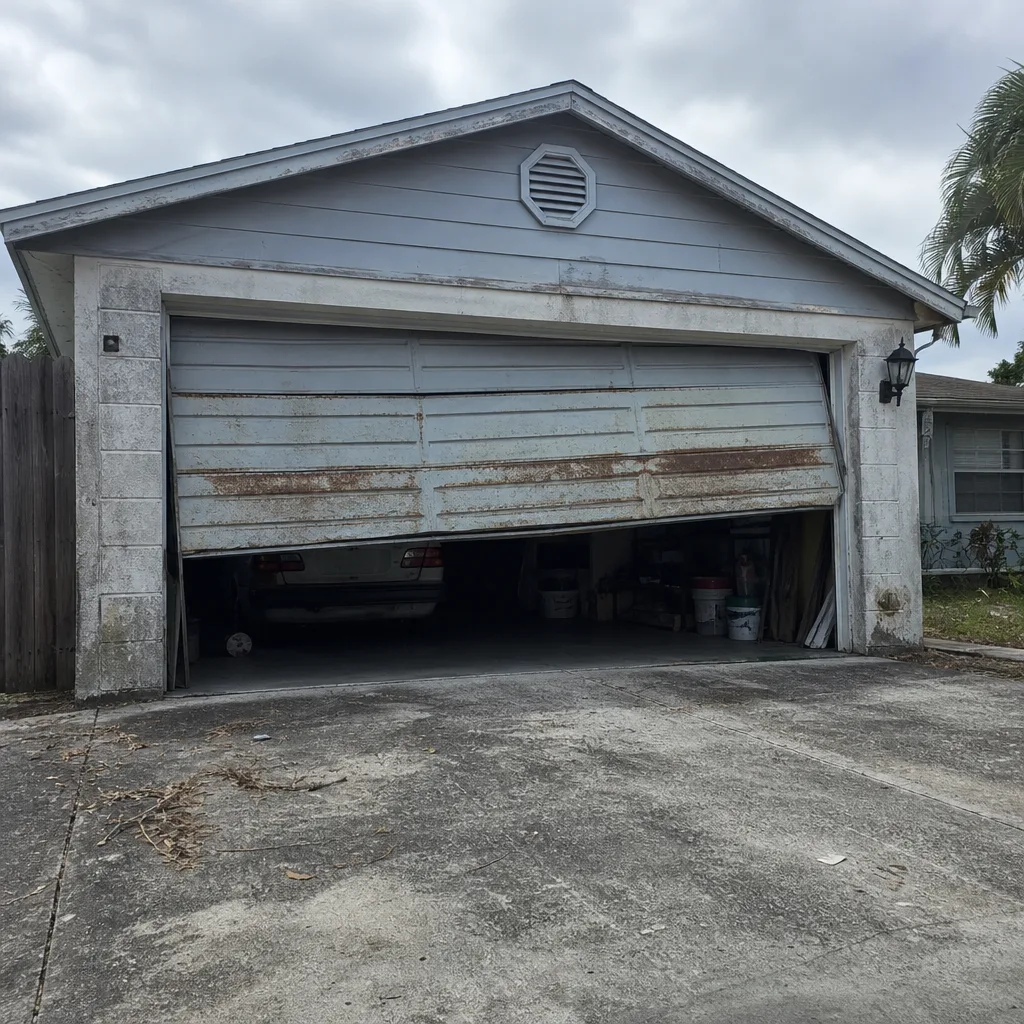 Before
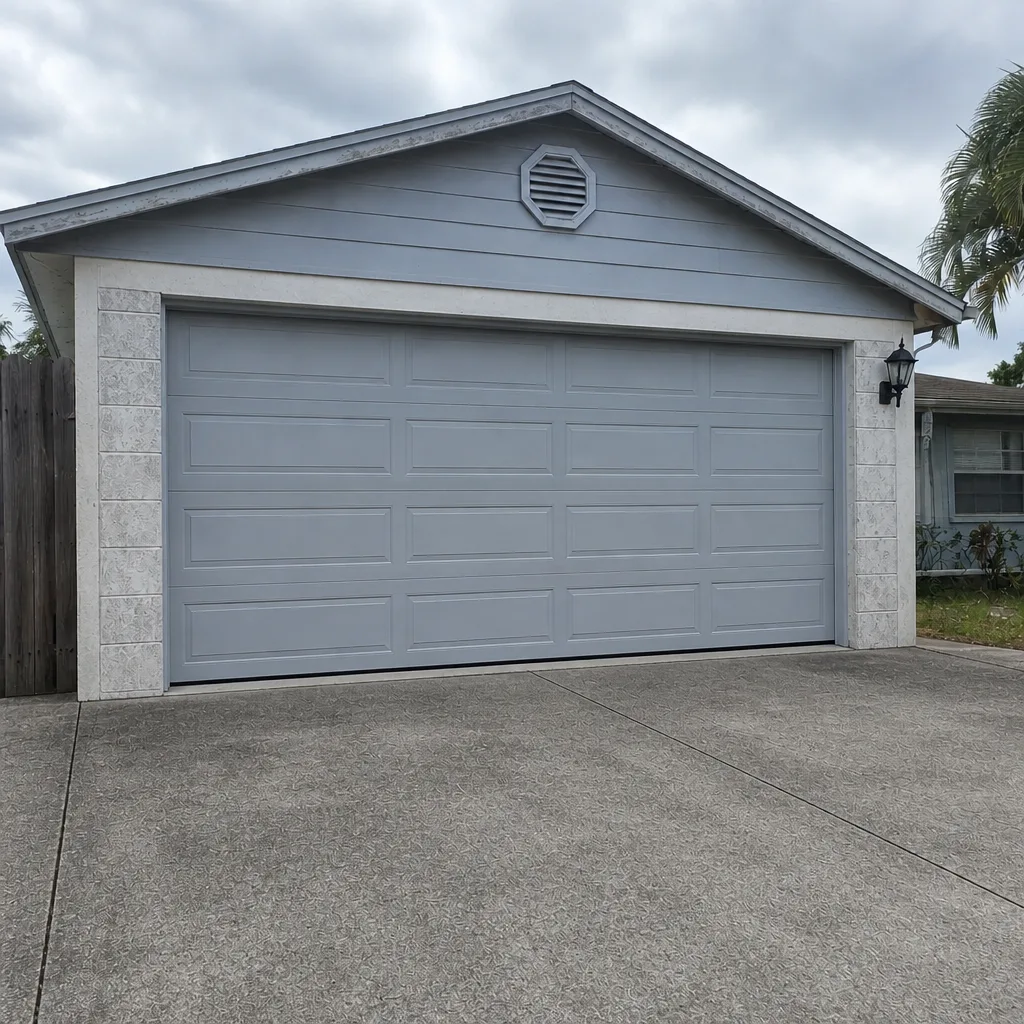 After
When to Call a Professional
Some jobs in this guide belong to you: the balance test, the monthly safety checks, lubrication, and the visual inspection after a storm. Others should be handed to a trained technician without hesitation. A snapped or visibly damaged torsion spring qualifies immediately. So does a door with a track bent out of line, a panel or hinge that has come loose, or any opener that’s reversing, stopping partway, or won’t respond to its remotes. These affect safety, not just convenience. Springs in particular are the most dangerous part of a garage door – we handle them so you don’t have to. Garage Door Repair Riviera Bay offers free estimates in Riviera Bay – call (855) 595-5127 to schedule a diagnosis or a pre-season tune-up.
Frequently Asked Questions
Twice a year is a good rhythm here, timed to Florida’s weather instead of the four-season model: a full tune-up in May before hurricane season, then a dry-season inspection and lubrication between November and April. Between those, monthly balance and safety checks take a minute and catch most developing problems.
Heat cycles steel, and a Riviera Bay garage gets hotter than the outside air on summer afternoons. Torsion springs expand and contract through that daily swing, adding fatigue across the season. That’s why spring failures cluster in the hottest weeks. Call (855) 595-5127 to schedule a spring inspection before summer if your door hasn’t been serviced.
Yes. Every hurricane season opens June 1 regardless of the early forecast, and a door that’s going to flex under wind load is much better found and fixed in May. A pre-season tune-up covers balance, anchors, hinges, seals, and the opener, and it’s the smallest cost compared to an emergency repair once a storm is on the water.
Only after a visual inspection. Check panels, track alignment, hinges, and anchor points first, and look at the spring for a visible break. If the track is bent or a panel is loose, don’t run the opener – call for a diagnosis. A door that opens and closes after a storm isn’t proof it’s fine; it’s proof it hasn’t failed yet.
Heat makes openers more prone to reverse unexpectedly, stop partway, or lose remote range. Not every symptom means the opener is failing – some are heat-related and clear when the garage cools. A proper diagnosis separates a logic-board issue from a sensor alignment or limit setting. Call (855) 595-5127 if your opener has been unreliable through a summer.
Focus on wear and corrosion, since dry-season doors don’t complain. Look at rollers for smooth movement, hinges for cracks, the bottom seal for stiffness and pull-away, and any hardware that’s loosened. Apply fresh lubrication, and if the balance test shows the door dropping or rising on its own, schedule a spring check.
The Bottom Line
Riviera Bay doesn’t have four seasons, and its garage doors shouldn’t be serviced as if it does. The real calendar is a May tune-up before hurricane season, careful attention through the June-to-September heat, a visual post-storm inspection after any named system, and a proactive dry-season check from November to April. That schedule keeps springs, openers, seals, and hardware ahead of failure instead of catching up to it. If you want help building the calendar around your door – whichever brand is on your house – a free estimate is the easiest place to start. Call (855) 595-5127 for a free estimate, and we’ll take it from there. Our technicians have up to 13 years of experience working on residential systems in this climate.
Written by the team at Garage Door Repair Riviera Bay.