Last updated November 22, 2026
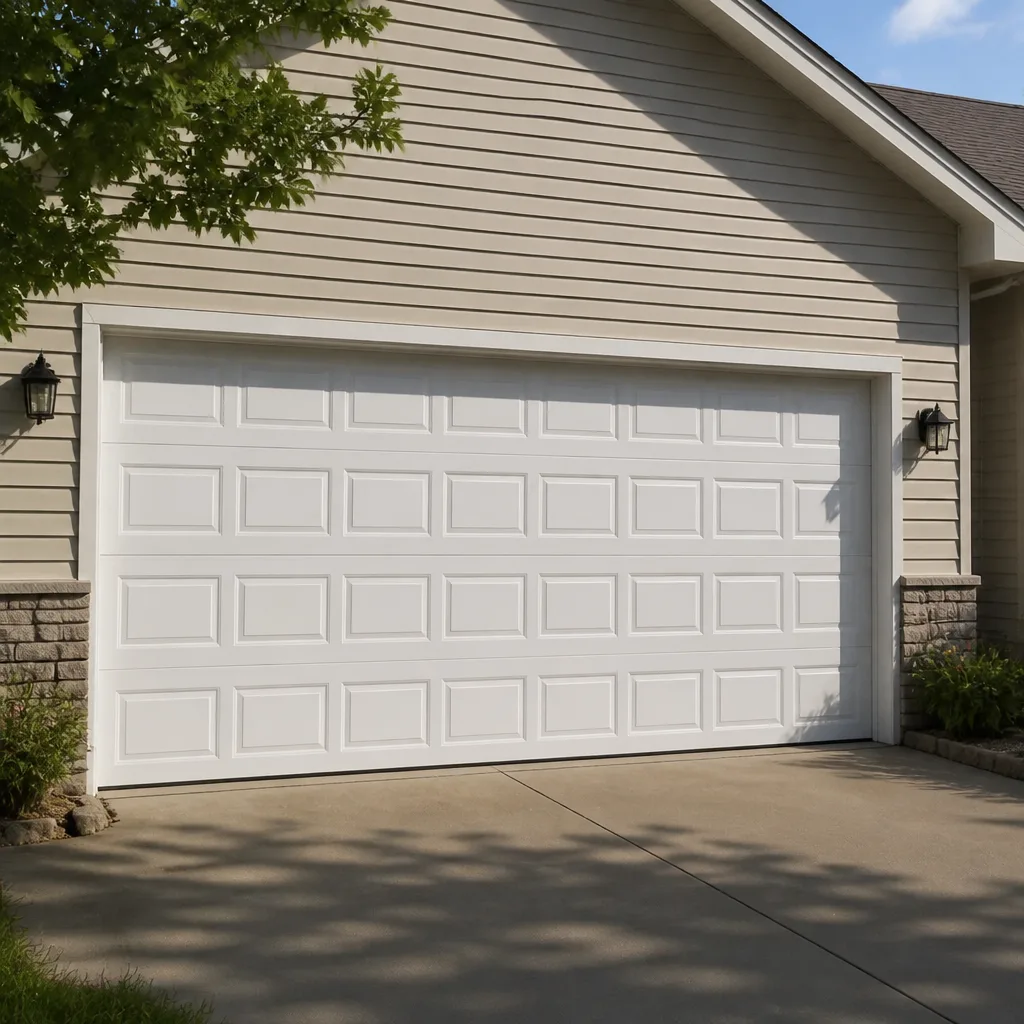 Raised-panel steel
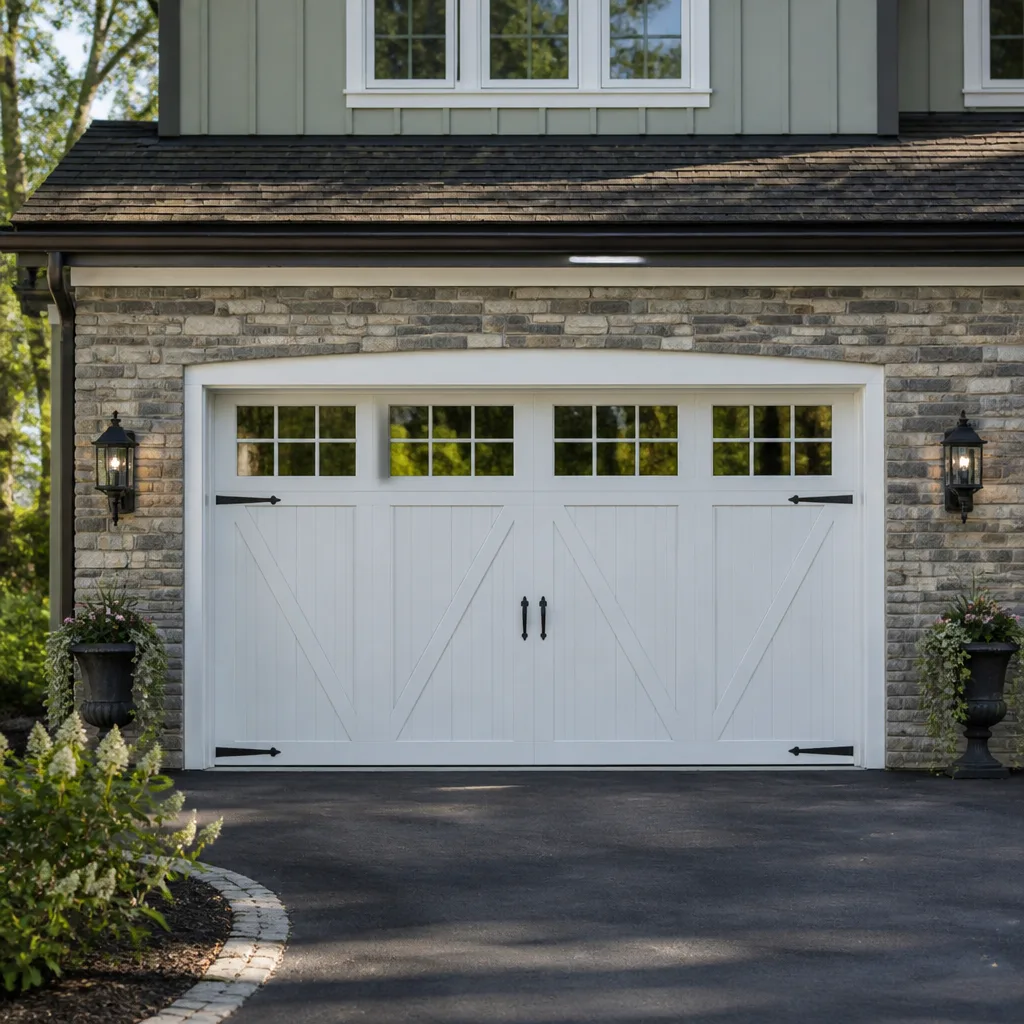 Carriage house
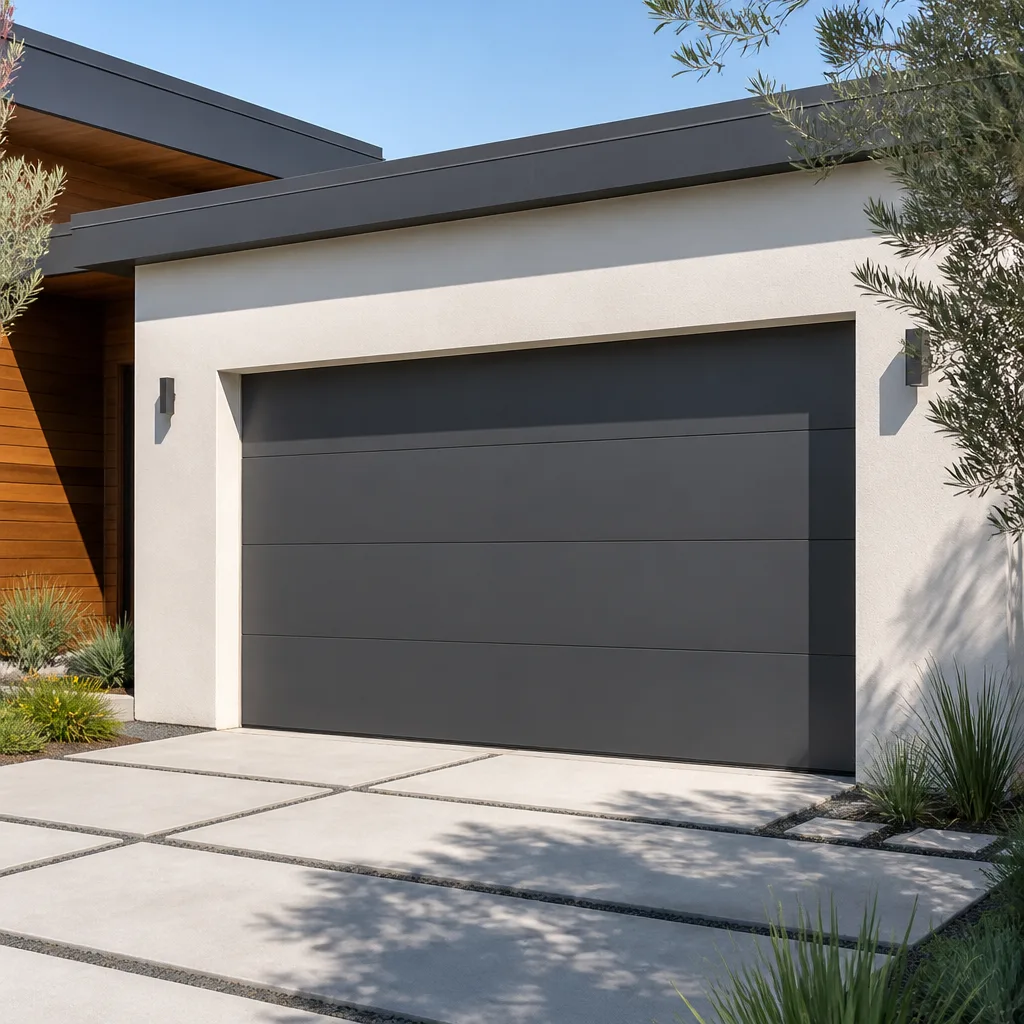 Modern flush
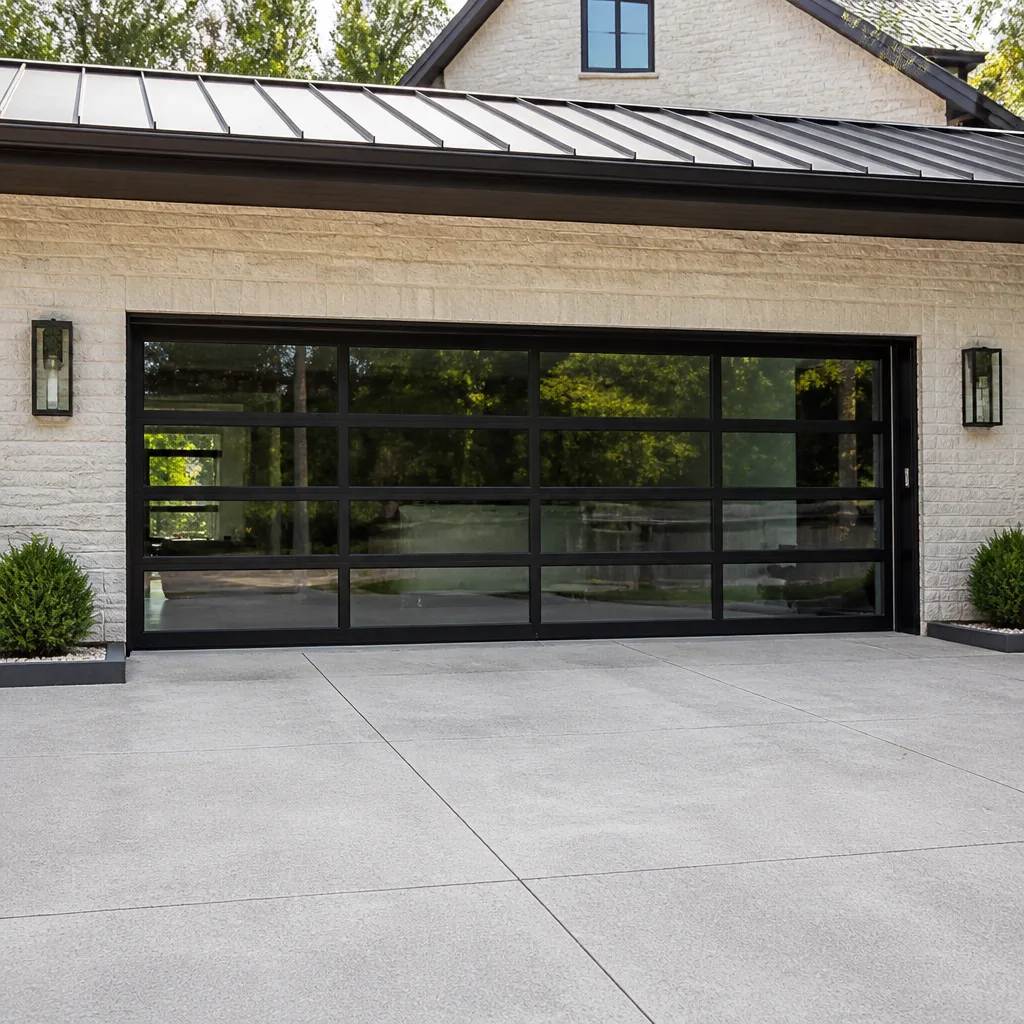 Full-view glass
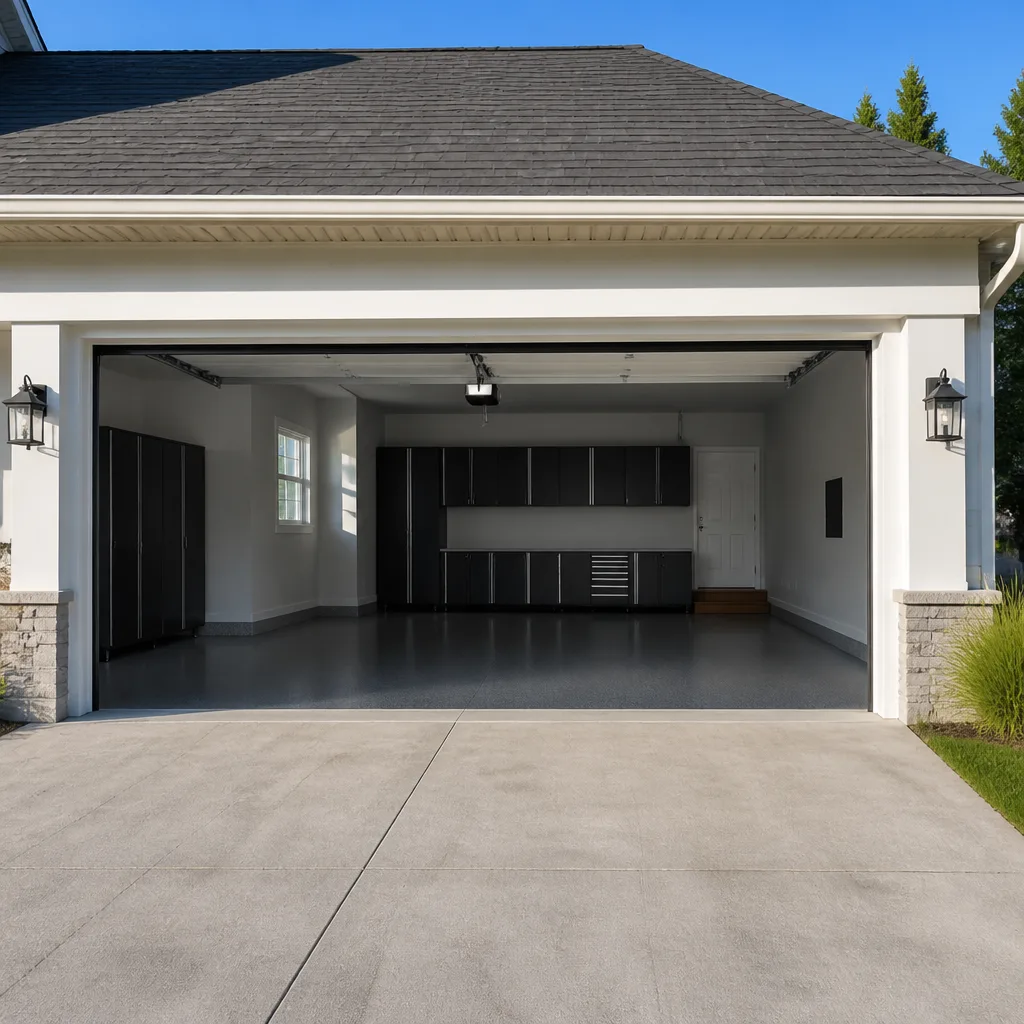 LiftMaster openers
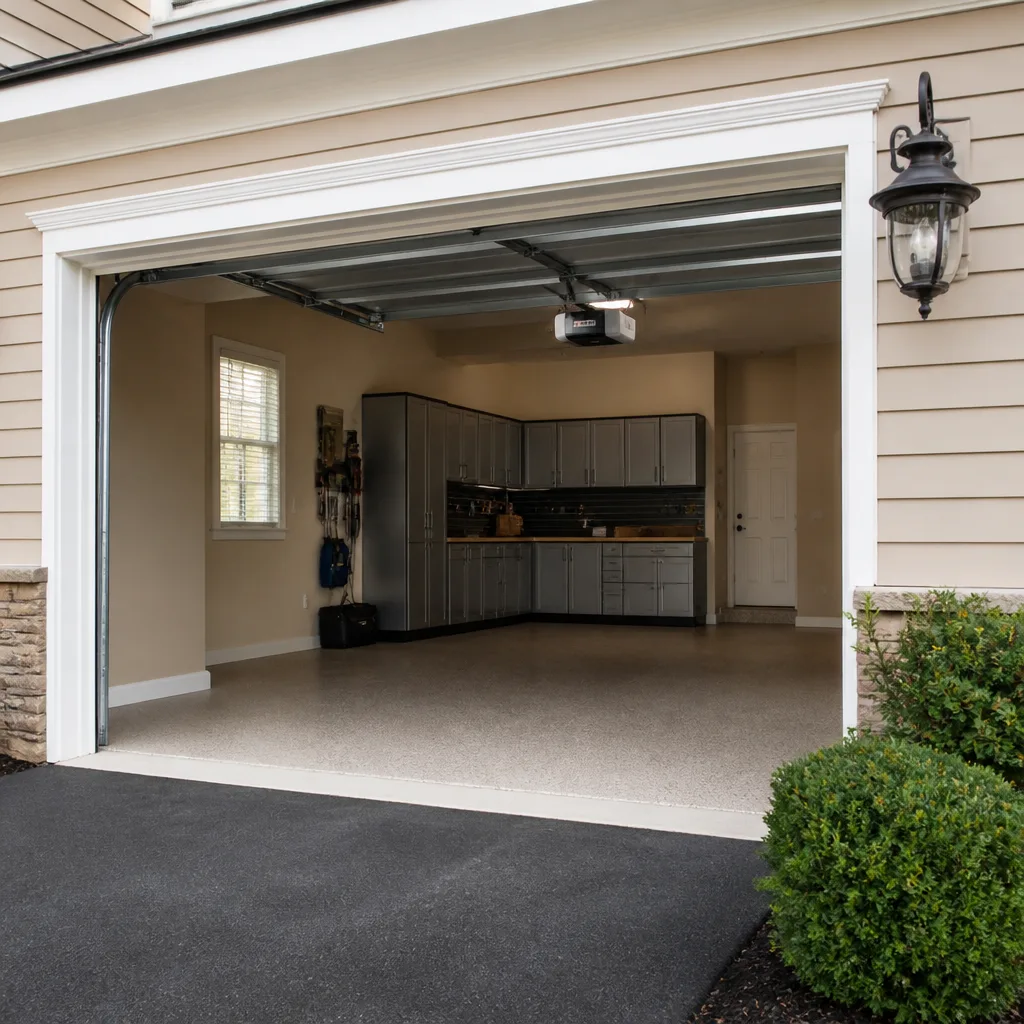 Chamberlain openers
Full 25-point door and opener safety check with every visit - springs, cables, rollers, tracks, and your LiftMaster or Chamberlain opener included
You get a price before we start. It does not change when the pro arrives.
Get your free estimateThe Complete Guide to Garage Doors in Riviera Bay
Most garage door guides are written for Phoenix or the Midwest. That’s a problem when your garage is half a mile from Tampa Bay and the hardware is already showing rust. The advice that keeps doors working in dry, inland climates quietly fails here, because the thing that wears out a Riviera Bay garage door isn’t cold. It’s moisture, salt in the air, and storm-season wind pressure working on the same springs and tracks year after year. This guide covers what actually holds up in coastal Pinellas County, and it’s built for the homeowner who wants to understand the whole system before they call anyone. Read it once and you’ll know what to buy, what to repair, and what to leave alone.
Quick Answer
A garage door in Riviera Bay wears faster than the same door inland because coastal humidity and salt air attack springs, hinges, and tracks long before the panels fail. Buy hot-dipped galvanized or heavier-gauge steel, keep the moving parts lubricated, and expect spring replacement sooner than the manufacturer’s inland guidance suggests. When the cost of repairs starts stacking up, replacement with a wind-rated door usually makes more sense here than patching year after year.
Styles & brands we work with
- Raised-panel steel
- Carriage house
- Modern flush
- Full-view glass
- LiftMaster openers
- Chamberlain openers
Table of Contents
- Why Riviera Bay Wears Garage Doors Differently
- Which Door Materials Hold Up in High Humidity
- Florida Wind Load Requirements and Riviera Bay Doors
- Full-Service Specialist vs. Single-Brand Dealer vs. Big-Box Installer
- Repair or Replace? The Riviera Bay Math
- A Simple Maintenance Routine That Works Here
- Common Mistakes to Avoid
- When to Call a Professional
Why Riviera Bay Wears Garage Doors Differently
Garage doors fail in layers, and the first layer to go in Riviera Bay isn’t the one most people are watching. The steel panels look fine. Underneath, the springs, hinges, rollers, and track hardware are quietly corroding because coastal humidity keeps a thin film of moisture on bare metal nearly all year. Inland Florida homeowners deal with heat. Riviera Bay homeowners deal with heat plus salt-laden air plus the wind that pushes both into every gap.
What that means in practice:
- Springs are the first casualty. Torsion and extension springs are under constant tension, and corrosion creates stress points where the wire fatigues and eventually snaps. A spring that lasts many years inland can give out faster when rust is chewing at it from day one.
- Tracks rust from the inside out. The inside of the track, where the rollers ride, is where moisture settles. Once rust pitting starts there, rollers drag, the door runs rough, and the opener works harder.
- Hinges and bearings seize. Little mechanism, big consequence. A seized hinge transfers load into the panel and the lift cables.
- Paint and finish break down faster. The sun is intense here and the humidity never really lets up, so a finish that lasts in a dry climate can chalk and peel sooner.
None of this is a reason to panic. It’s a reason to inspect the moving parts a couple of times a year instead of once, and to choose replacement materials with corrosion in mind. In our experience, the Riviera Bay homes that run trouble-free are the ones where somebody is paying attention to the hardware, not just the panels.
Which Door Materials Hold Up in High Humidity
Material choice is the single biggest factor in how long a door lasts in coastal Pinellas County. Here’s how the main options actually behave in Riviera Bay’s climate, ranked by how much corrosion protection you get for the money.
Steel: gauge and finish matter more than the label
Steel is the most common residential door, and it’s fine here, but only if you read the spec. A heavier-gauge steel door with a galvanized base and a good factory finish will outlast a lighter door every time in this humidity. Ask what gauge the steel is and whether the finish includes corrosion protection. Avoid the temptation to judge by look alone; two doors that photograph the same can have very different steel underneath.
Aluminum: light and rust-proof, but dents easily
Aluminum won’t rust, which is a real plus in this climate. The trade-off is strength: it dents more easily and doesn’t insulate as well, so it suits certain openings and budgets but not a home that needs impact resistance.
Fiberglass: no rust, good looks, needs UV attention
Fiberglass and composite doors ignore rust entirely, which makes them appealing near the water. The catch is UV exposure and finish care. Without proper protection the surface can dull faster under Florida sun, so upkeep shifts from fighting rust to maintaining the skin.
Wood: beautiful, demanding
Wood doors need regular sealing and repainting in this humidity, and they’re the highest-maintenance choice for Riviera Bay. If you love the look, plan on disciplined upkeep.
Whatever the material, the frame, springs, and hardware are where coastal wear concentrates, and those are the parts that determine whether the door lasts. When you’re choosing a new door, ask the installer to spec corrosion-resistant springs and hardware alongside the panels.
Florida Wind Load Requirements and Riviera Bay Doors
Wind load is the Riviera Bay garage door question most homeowners ask late, when they should ask first. A garage door is one of the largest openings in your home’s envelope, and in a storm it’s often the first thing to fail. When a garage door buckles inward, the wind pressure gets inside and the roof becomes the next thing under threat. That’s why Florida building code treats the garage door as a structural component, not a decoration.
Pinellas County falls in a high-wind region, so replacement doors generally need to be rated for the wind pressures your home is expected to see. The exact requirement depends on where your home sits, how it’s built, and what your local building department requires, which is why we tell every Riviera Bay customer to confirm specifics with the city’s building department before ordering. What’s not negotiable is the principle: don’t install a door that isn’t rated for this area.
Here’s how to handle it in order:
- Check the current door’s rating. Most doors carry a wind-load label or stamps on the panels or track. If yours is missing or unreadable, that’s a clue the door may predate current standards.
- Confirm what you need. Ask the building department or a qualified installer which design pressure your home requires.
- Buy the rated door plus the reinforcement it needs. Wind-rated doors rely on rated tracks, hinges, and a heavier strut or reinforcement system, not just strong panels. A panel-only upgrade is not the same thing.
- Keep it anchored. Rated hardware only works if it’s properly fastened and the door is in adjustment. A rated door that’s out of balance and ridden hard isn’t protecting anyone.
A properly rated door is also a good door to live with: heavier tracks run smoother and last longer in this climate, which is one of those rare cases where code compliance and everyday durability point the same direction.
Full-Service Specialist vs. Single-Brand Dealer vs. Big-Box Installer
Riviera Bay homeowners generally have three ways to get a garage door job done, and the differences matter when something goes wrong in this climate. Knowing what each one actually offers saves you a frustrating phone call.
Single-brand dealer
These shops sell and service one manufacturer’s line, so they’ll know that brand deeply. The limitation is obvious: if your existing door or opener came with the house, brand bias shows up in the estimate. You may get a recommendation shaped by inventory rather than by your system.
Big-box installation
Retailers subcontract installation, and the name on the box isn’t the name that shows up at your door. That’s workable for a basic replacement, less so for diagnosis, spring work and emergency repairs. Who fixes it when the installer’s panel doesn’t line up with your existing track layout? You’re back on the phone with a call-center.
Full-service specialist
This is the model that fits the wear cycle in Riviera Bay. A specialist should work on the brand that’s already on your house rather than steer you to what they’d rather sell. That means handling LiftMaster and Chamberlain openers, Genie and Clopay doors, and whatever hardware came with the home, plus repair, spring work and replacement under one call. Our technicians are factory-familiar with LiftMaster, Chamberlain, Genie, and Clopay systems, and we diagnose first, then recommend, so the recommendation fits your system rather than a truck full of parts.
When you’re comparing quotes, ask one question: does this company service the brand on my house, or only the brand they’re trying to sell? The honest answer tells you which of the three models you’re dealing with.
Repair or Replace? The Riviera Bay Math
The repair-versus-replace decision is the one most homeowners get wrong, and it’s because coastal wear skews the numbers. If you’re deciding right now, call Garage Door Repair Riviera Bay for a diagnostic and a written estimate. Repairs here are quoted and agreed before any work starts, so the price you authorize is the price. Here’s how to think through the decision.
Repair makes sense when:
- The door and panels are structurally sound and properly rated for this area.
- The problem is isolated to one component: a spring, an opener, a roller, a track section.
- The door is still in balance and the panels are straight.
- The finish is intact and the hardware is free of heavy corrosion.
Spring repair is the classic case. A snapped torsion spring in Riviera Bay is a same-day job for us much of the time, and it’s usually far cheaper than replacing a sound door. We handle springs as a dedicated service because they’re the most dangerous part of any garage door, and because a properly spec’d replacement spring is often what stops the same failure from happening again. Once the springs are back in order, the door should feel balanced and quiet again.
Replacement makes sense when:
- Multiple components are failing in the same year. A door that needs springs, tracks, and opener repair within a season is telling you something.
- The panels are dented, delaminated, or not wind-rated for Pinellas County.
- Corrosion has reached the panels, hinges, and frame, not just the springs.
- You want a rated door that’s built for coastal conditions and higher-quality hardware that wears longer.
Installation is a measured, scheduled job. We’ll come out, take the measurements, and give you a written price before you commit. That’s the time to ask about wind rating, steel gauge, and corrosion-resistant springs, so the new door lasts longer than the old one did. If you’re scheduling garage door installation, start the conversation early so the door you need is ordered and measured before it’s installed.
Here’s the practical summary, if you want a quick rule:
- One component, sound door: repair.
- Two or more components per year, door still rated: repair the critical one, watch the rest.
- Two or more failures within a single season, or a door that’s not wind-rated: replace.
- Repeated spring failures: replace the springs with corrosion-resistant ones, then decide on the rest.
A Simple Maintenance Routine That Works Here
Garage doors in Riviera Bay don’t need a lot, but they need the right things done on the right schedule, because the climate works on them differently than inland. Here’s a routine that takes a few minutes and pays for itself.
- Look at the hardware each season. Check hinges, rollers, and track edges for rust. Rust on a hinge is a reason to inspect, not to panic; fuzz on the floor plate and the tracks is a sign to clean and lubricate.
- Lubricate the moving parts. A purpose-made garage door lubricant on hinges, rollers, and spring coils (only where the manufacturer says to) slows the corrosion cycle. Avoid getting lubricant on wood or painted finishes.
- Test the balance. With the door closed and the opener disengaged, lift it halfway and let go. A balanced door stays where you leave it. A door that drops or struggles to lift is dragging; that’s a sign of spring or track wear.
- Listen to the door. A new squeak, a grumble, or a door that lurches on the way up is the early warning. Fixing a dragging roller now is cheaper than replacing a bent track panel later.
- Check the safety reverse. Put a small object in the door’s path and confirm the door reverses or stops. This is a safety device; if it doesn’t work, that’s a repair, not a maybe.
We don’t recommend adjusting or replacing springs yourself. Torsion springs are under enormous stored tension and can cause serious injury, and cables can snap without warning. That’s work for a trained professional, which is exactly why we treat garage door repair as a system-level job: diagnose the whole door, not just the part that broke.
If the door is running but the opener is misbehaving, that’s often a separate fix. We handle garage door opener repair for mechanical and smart-home-integrated systems alike, including older LiftMaster, Chamberlain, and Genie units that have been in the house for years.
Frequently Asked Questions
Coastal humidity and salt in the air keep a thin film of moisture on bare metal, so springs, hinges, and tracks corrode steadily instead of seasonally. Inland Florida homes see the same heat, but without that constant moisture-on-metal contact. That’s why choosing corrosion-resistant hardware and lubricating on a regular schedule matters more here than most generic guides let on.
Pinellas County sits in a high-wind region, so a replacement door generally needs to meet a rated design pressure for your home. The exact number depends on the home, its construction, and your local building department, so confirm before you order any door. We’ll spec a rated door and rated hardware together so the rating actually holds.
Choose by system, not by name alone. We work on LiftMaster and Chamberlain openers, Genie operators, and Clopay doors, but the brand matters less than whether the door is rated for this area and the hardware can handle the humidity. A well-spec’d door from any of the major brands will outlast a cheap door with the wrong hardware.
Usually yes, when the failure is a snapped spring and the replacement part is on hand, and springs are where we specialize. Call us as soon as the door won’t lift; a trapped car is a good reason to call early rather than wait.
Not necessarily cheaper, but often better value, because you’re getting a diagnosis instead of a sales pitch. A single-brand dealer may steer you to their line regardless of what your home already has. A specialist should work on the brand that’s already there and recommend only the repair or replacement your system actually needs.
Repair if one component has failed and the door is still rated and structurally sound. Replace if multiple parts are failing within a season, the panels are not wind-rated, or corrosion has reached the frame and hinges. Call us for a free estimate and we’ll walk through both options for your door.
See the difference
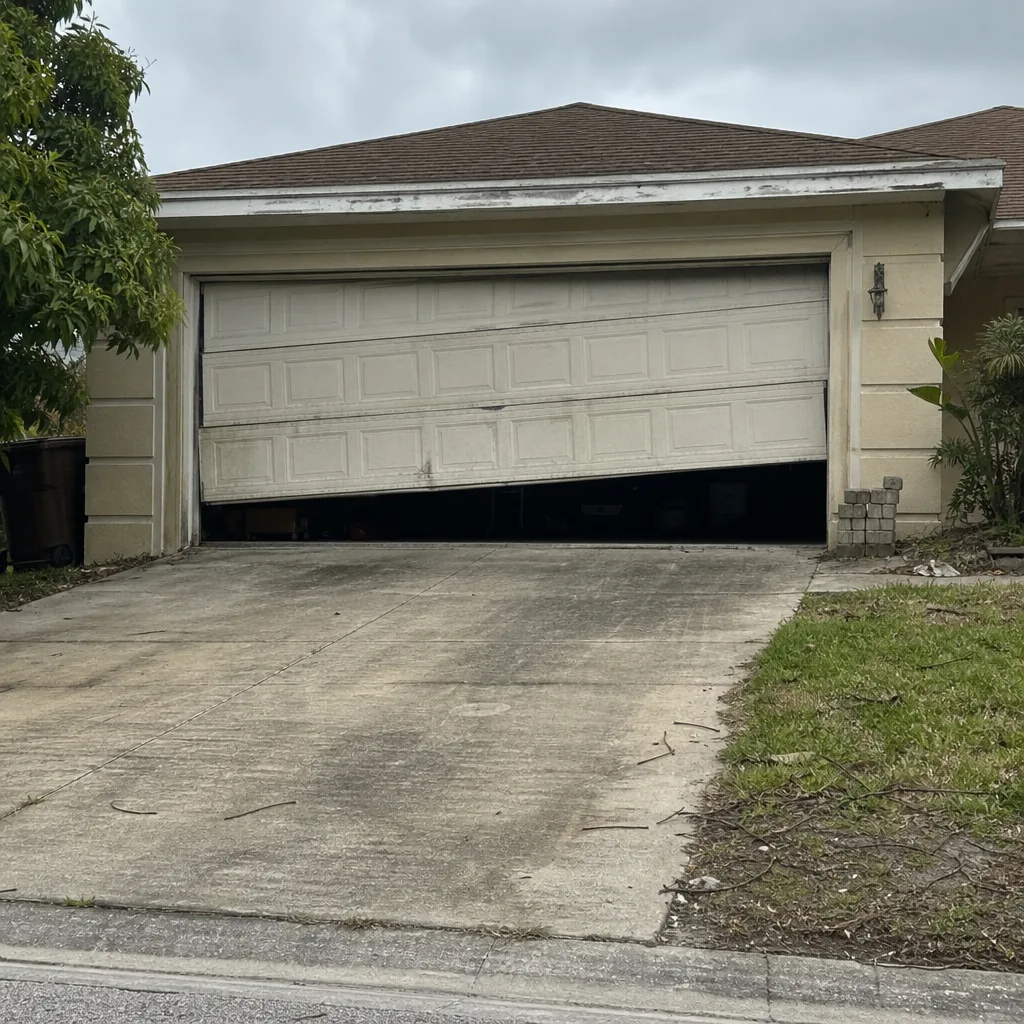 Before
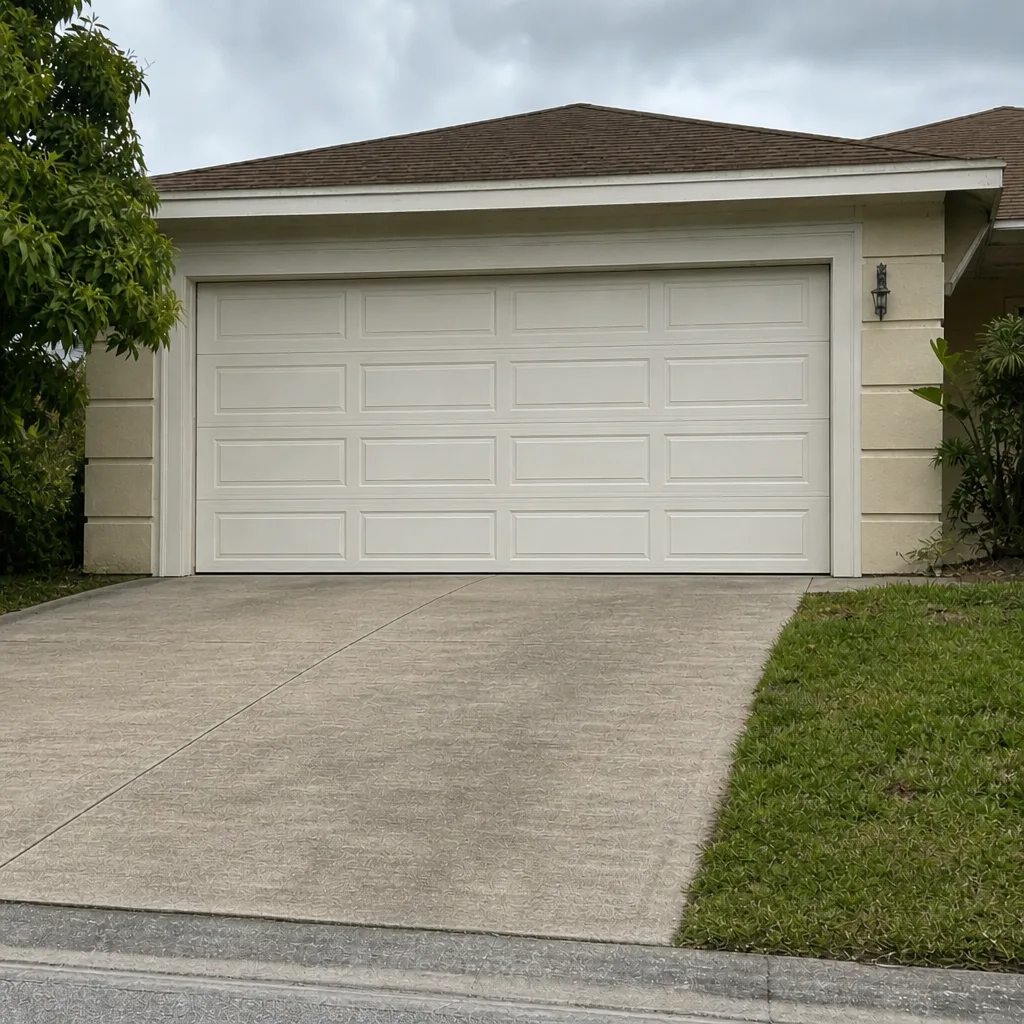 After
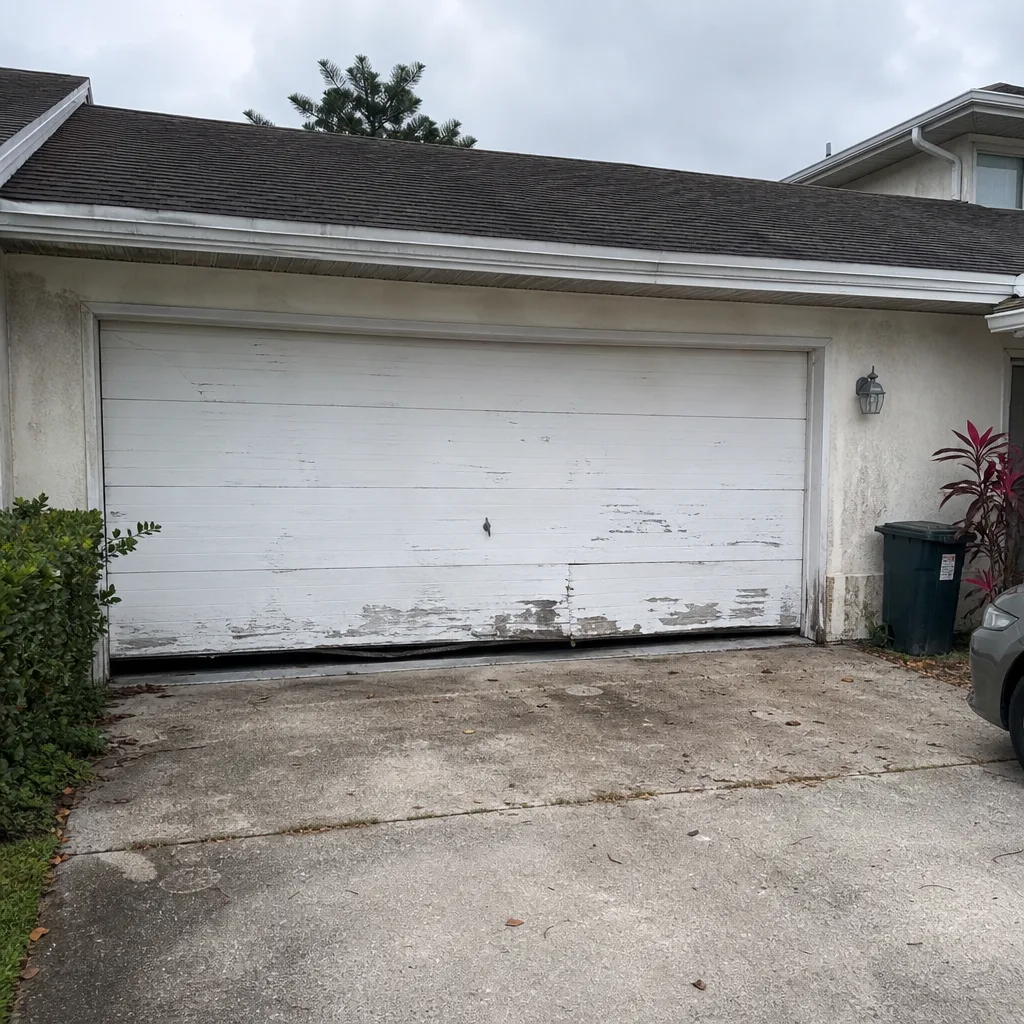 Before
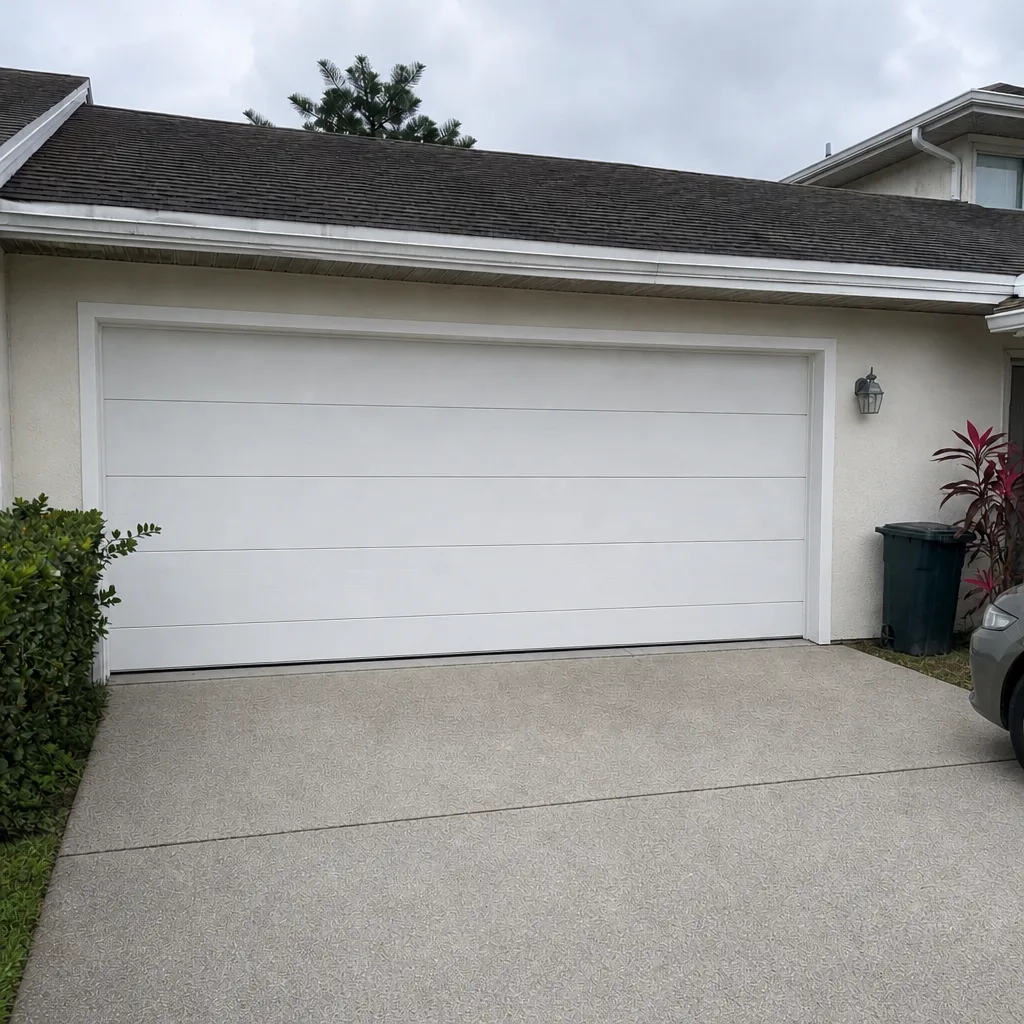 After
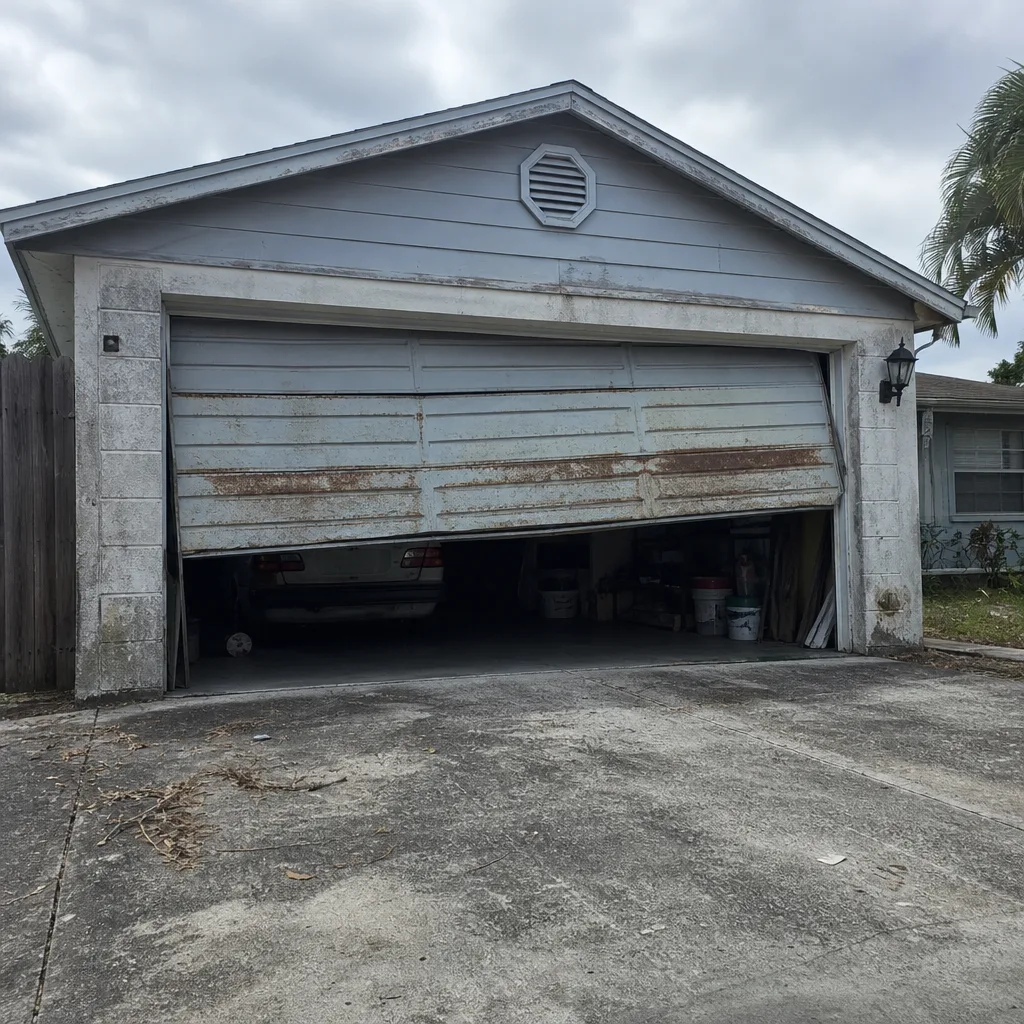 Before
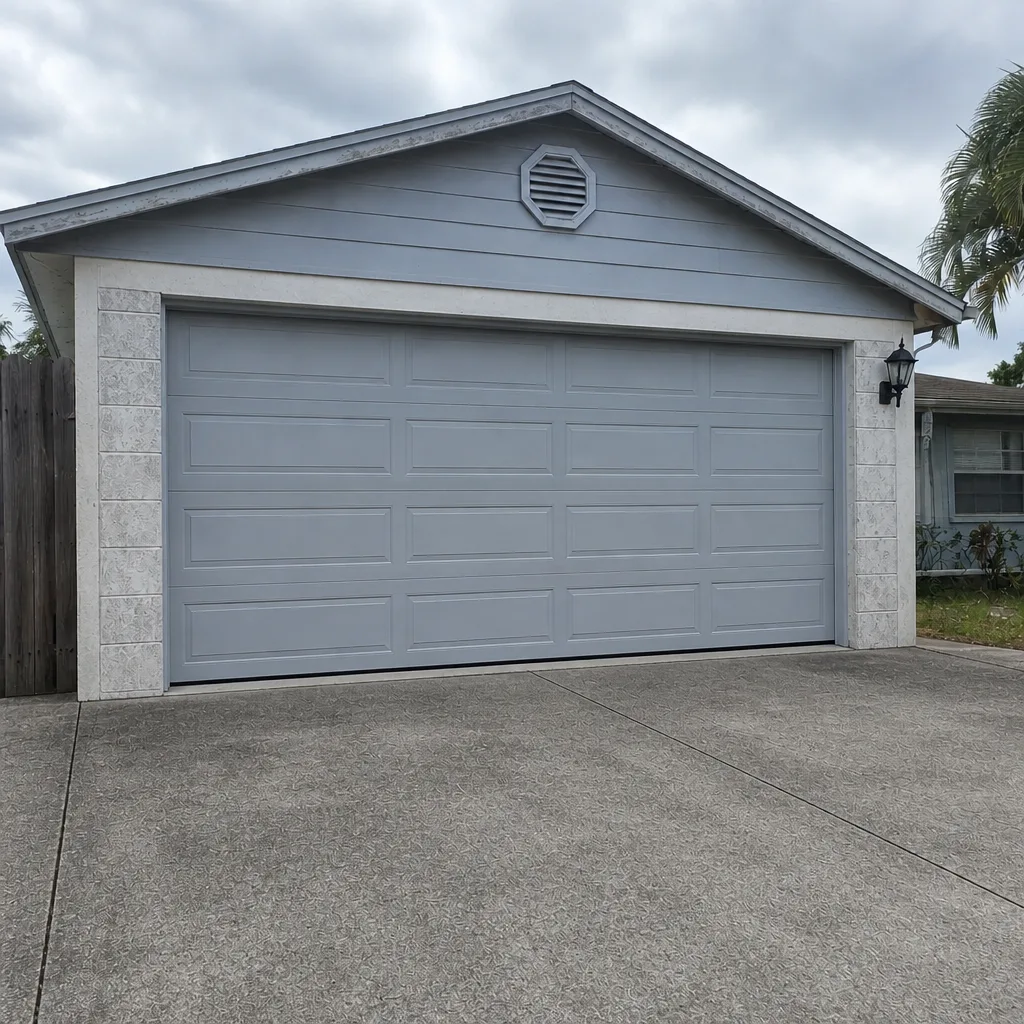 After
Common Mistakes to Avoid
- Buying on looks instead of steel gauge and finish. Two doors can photograph identically and have very different steel underneath. In this humidity, the lighter door wins the price tag and loses the longevity race.
- Replacing a door with an unrated one. A replacement without a wind rating can undo the point of the work and put the home at risk in a storm. Confirm the rating before you sign.
- Ignoring rust until the spring snaps. Rust on hinges and tracks is an early warning. Catching it in a seasonal check usually means a cleanup, not an emergency.
- Letting the opener do the lifting. A stiff or out-of-balance door puts the burden on the motor. It’ll run for a while and then burn out an opener you didn’t need to replace.
- Choosing the cheapest quote without asking what’s included. A low quote may cover the panel and not the rated hardware, or the spring but not the balance adjustment. Ask what’s in the written estimate.
- Paying for an emergency visit when a scheduled repair would cost less. If the door is safe and closed, a scheduled diagnostic is the better call. If it’s stuck open or won’t budge, that’s when emergency service matters.
- Assuming the brand on the door is the only choice. A brand-agnostic specialist can work on what’s already installed rather than sell you a new line you didn’t need.
When to Call a Professional
Call a professional if the door won’t lift, the spring has snapped, the door is stuck open, or the opener reverses on its own. Springs and cables are genuinely dangerous, and a door that’s off its track can fall. A door that’s loud, slow, or dragging is also worth a call before it fails. Garage Door Repair Riviera Bay offers free estimates in Riviera Bay for repair, opener work, spring replacement, and new doors, and emergency service is a real offering, not a slogan. Call (855) 595-5127 and we’ll diagnose first, then recommend only the work your door needs.
The Bottom Line
Riviera Bay’s humidity, salt air, and storm wind hit garage doors harder than most of the country, so generic advice gets expensive fast. Choose materials for corrosion resistance, insist on a properly rated door for Pinellas County, lubricate the moving parts, and watch the hardware more than the panels. Repair single-component failures on a sound door; don’t keep patching a door that’s failing from every direction. When the door needs more than a patch, choose a specialist who works on the brand already on your house. Our technicians have up to 13 years of experience, and we handle the springs as well as the door, opener, and install. Call (855) 595-5127 to get a free estimate.
Written by the team at Garage Door Repair Riviera Bay.