Last updated November 22, 2026
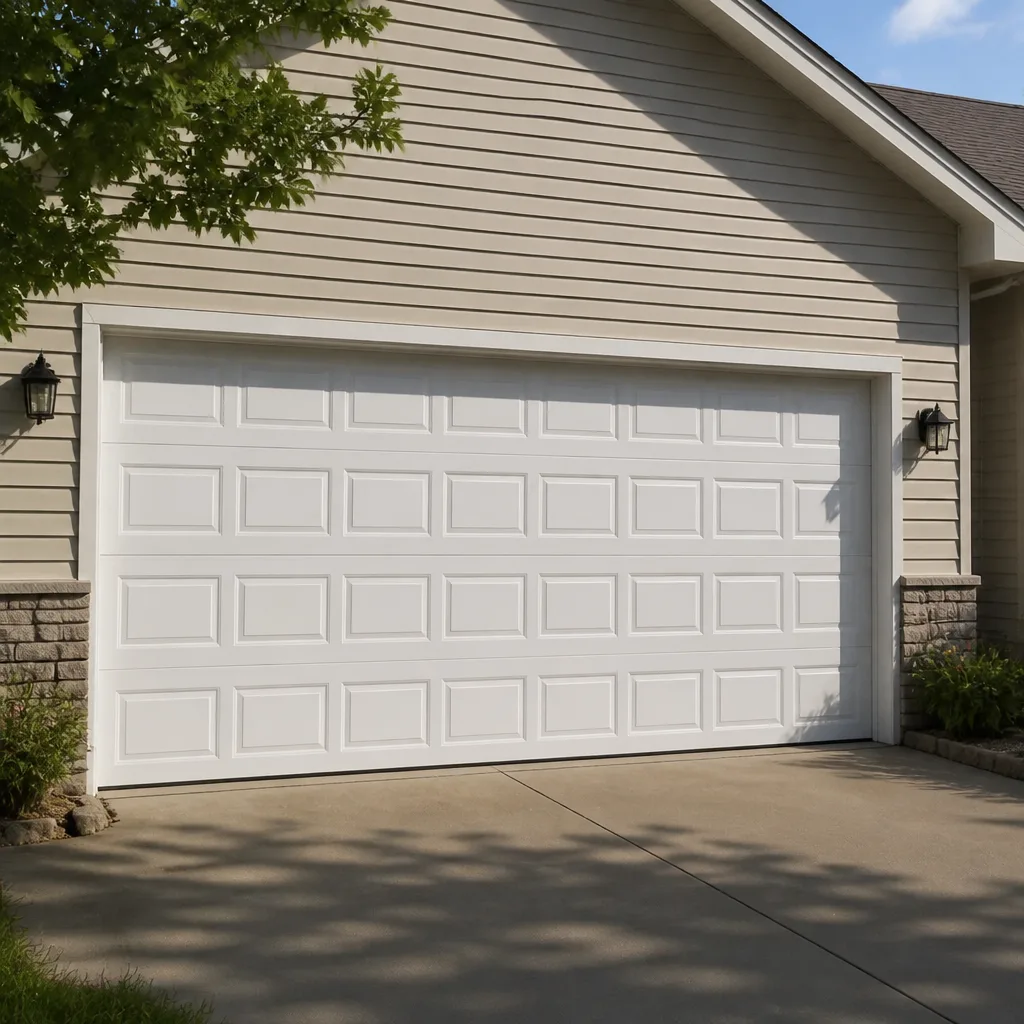 Raised-panel steel
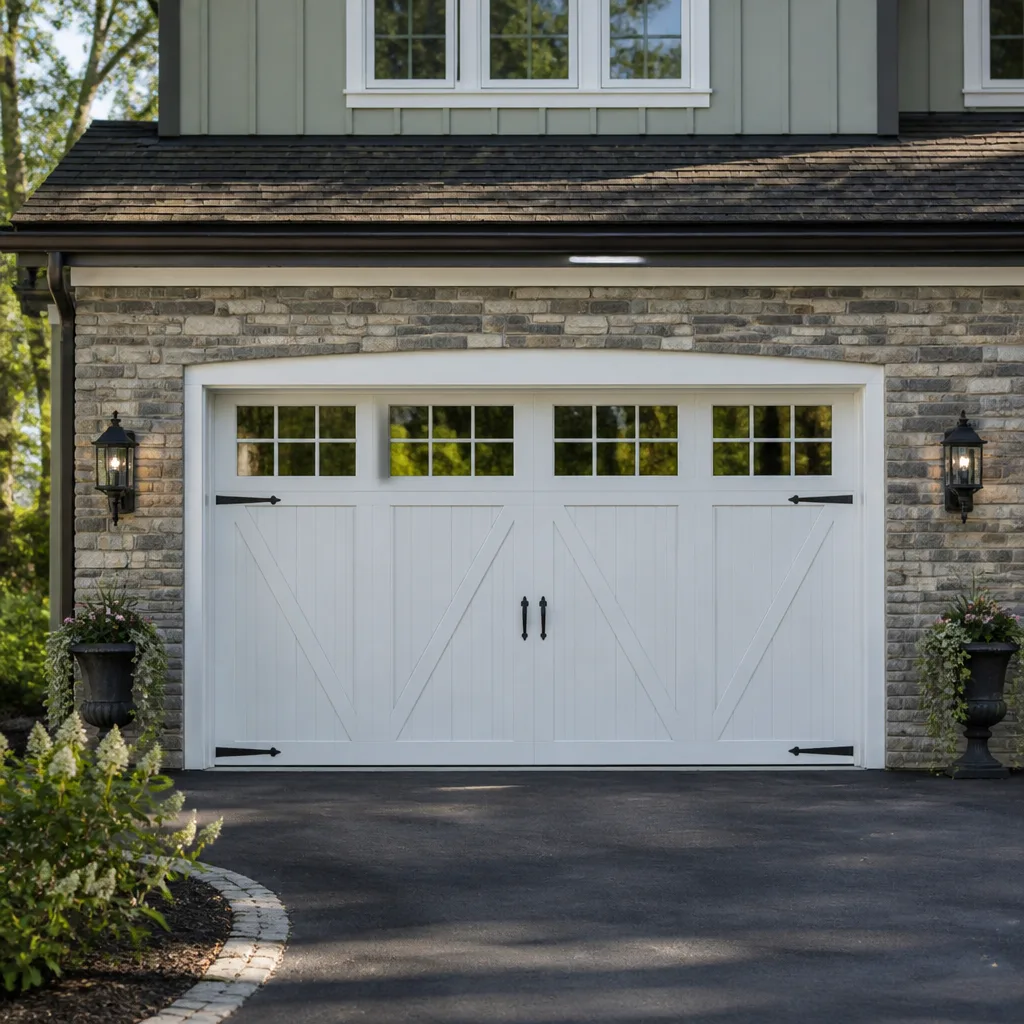 Carriage house
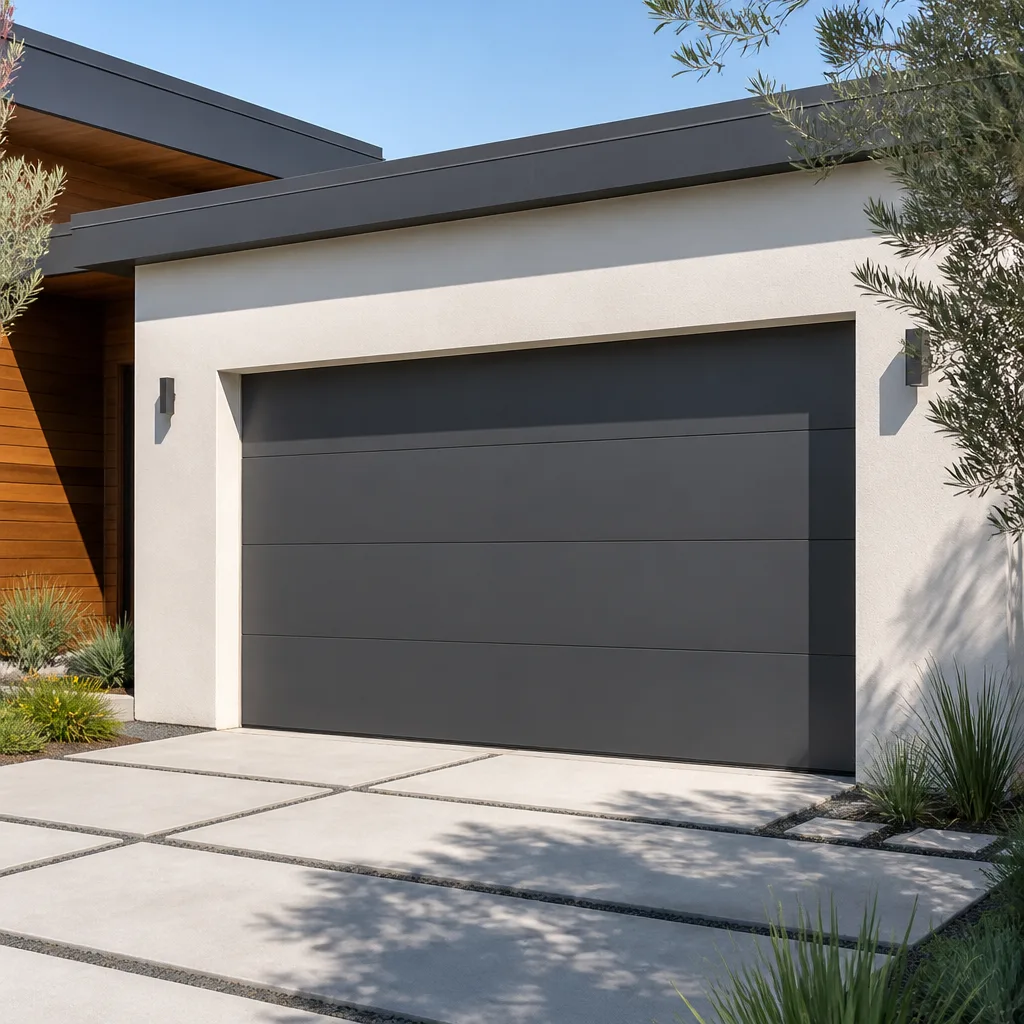 Modern flush
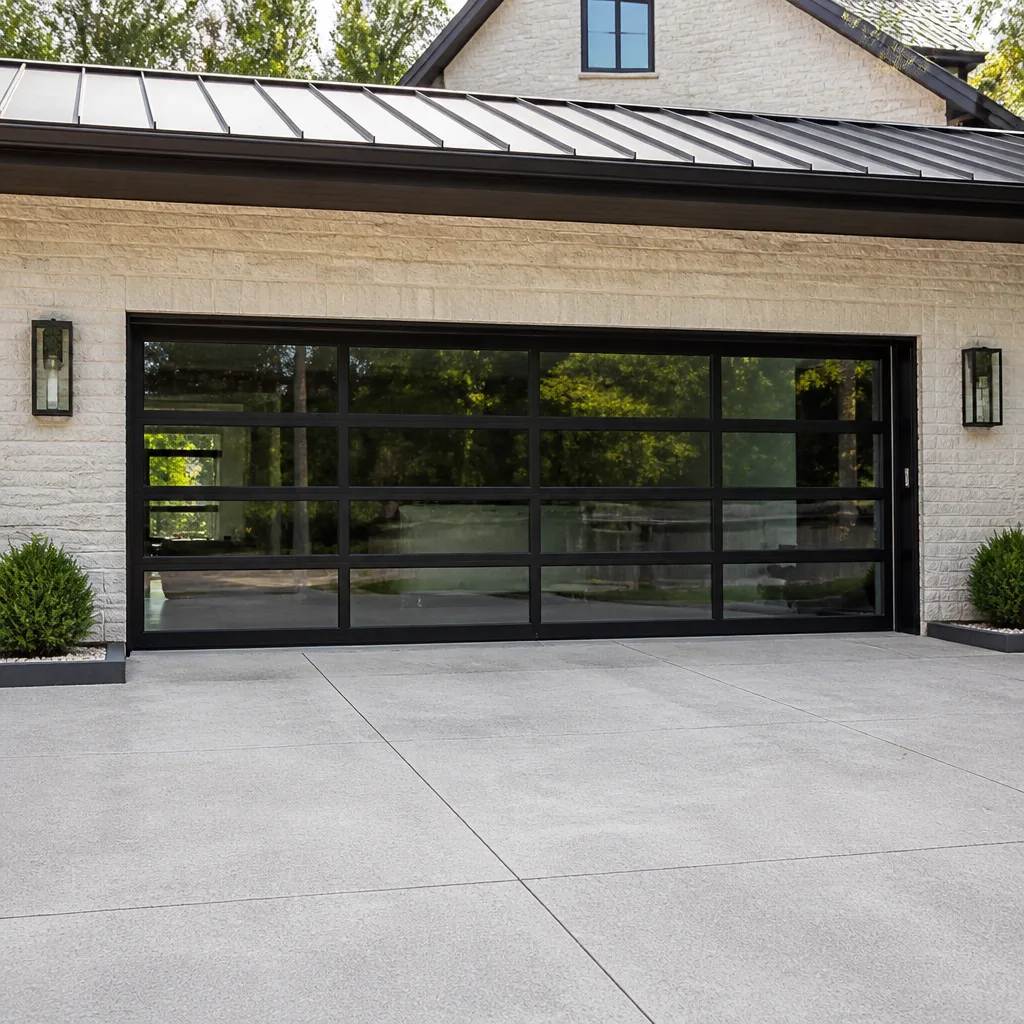 Full-view glass
 LiftMaster openers
 Chamberlain openers
Full 25-point door and opener safety check with every visit - springs, cables, rollers, tracks, and your LiftMaster or Chamberlain opener included
You get a price before we start. It does not change when the pro arrives.
Get your free estimateGarage Door Warning Signs: A Riviera Bay Homeowner’s Reference Guide
Most garage door warning signs get described in vague terms like “unusual noises,” which tells you nothing about whether to call someone today or next month. A grinding sound on a garage door in Arizona is probably a lubrication issue. The same noise on a door in Riviera Bay is more likely the beginning of a corroded bearing, and the fix is different. That gap between “it’s making a noise” and “I know what that noise means” is exactly what this guide closes. We’re going to name the specific sounds, the specific visual cues, and the specific behaviors that matter in a Riviera Bay garage, tell you which ones can wait and which ones can’t, and skip the alarm-ringing. By the end you’ll be able to walk out to your garage, listen for thirty seconds, look at three things, and know whether you’re scheduling a repair or making a phone call right now.
Quick Answer
In Riviera Bay’s humid, salt-laden air, the garage door warning signs that matter most are a bang followed by a door that won’t lift (broken spring), a grinding or squealing that gets louder over a few days (failing bearing or roller), and a visibly frayed or rust-streaked cable. Broken springs and frayed cables justify a same-day call. Cosmetic surface rust on a panel, a slightly noisy cycle, and a door that runs a little slower than it used to can usually wait for a scheduled visit. Everything else falls in between, and this guide sorts it out.
Styles & brands we work with
- Raised-panel steel
- Carriage house
- Modern flush
- Full-view glass
- LiftMaster openers
- Chamberlain openers
Table of Contents
- Sound-Based Diagnostics: What Your Door Is Telling You
- Corrosion Clues: Surface Rust Versus Structural Rust
- Behavioral Warning Signs: Slow, Uneven, Reversing
- The Two Signs That Justify a Same-Day Call
- Opener Versus Mechanical: How to Tell Them Apart
- Cosmetic Versus Safety-Critical: The One-Week Rule
- Why Riviera Bay’s Climate Changes the Timetable
- A Monthly Walk-Around Checklist
Sound-Based Diagnostics: What Your Door Is Telling You
Listen before you look. The sound a garage door makes on its way up is the single most useful diagnostic tool a homeowner has, and it costs nothing to use. Walk out to the garage, hit the button, and pay attention to four distinct noises. Each one points at a different component and a different level of urgency.
- Grinding. A low, rough grind is usually metal-on-metal contact, most often a dry or failing bearing at the torsion bar or a roller that’s seized inside its bracket. In Riviera Bay, grinding often shows up as the humidity climbs, because bearings that were already marginal lose their remaining grease film. A bearing that grinds quietly for a week can seize and stall the opener within a month.
- Squealing. High-pitched squealing tends to come from a roller or hinge that’s lost lubrication. It’s the least serious of the four sounds, but squealing that appears suddenly on one side of the door often means a roller is starting to fail, not just asking for grease.
- Popping. A single sharp pop right as the door begins to move is the classic sound of a torsion spring releasing tension, sometimes as it breaks. If the pop comes with a door that won’t lift, treat it as a broken spring and stop operating the door.
- Rattling. Continuous rattle over every bump and seam points to loose hardware: hinges, bolts, or a track that’s working its way free of the wall. Rattling is rarely dangerous on its own, but a loose track can throw the door off its rollers, which is.
One more sound deserves its own line: a snap, bang, or thud followed by silence and a door that won’t budge. That combination is what a broken spring sounds and feels like, and it’s covered in its own section below. The key point about sound is that it nearly always arrives before the visual damage does. A door that’s audible today is telling you something a door inspection would find next month. Catching it at the sound stage is how you keep a $180 bearing from turning into a stalled opener, and how you avoid a door that quits with your car on the wrong side of it. If you’d rather have trained ears on it, we handle garage door repair for doors doing exactly this kind of early complaining.
Corrosion Clues: Surface Rust Versus Structural Rust
Riviera Bay’s air holds moisture and salt year-round, and a garage door is a large slab of steel sitting in it. Corrosion is the most common reason a Riviera Bay door ages faster than the same door in a dry climate, and it’s the warning sign homeowners most often misread in both directions: either panicking over harmless surface bloom or ignoring a cable that’s rusting from the inside out. The distinction is straightforward once you know where to look and what to look for.
Surface rust is a light orange film on the paint, typically on the lower panels, around fasteners, or along the bottom rail. Wipe a spot with your thumb. If the orange comes off on your skin and the paint underneath is intact, it’s cosmetic. It’s worth cleaning and touching up, but it’s not a repair call.
Structural rust goes deeper. Look for these:
- Pitting. If the steel feels rough or pitted where the rust sits, the metal is thinning.
- Rust streaks on springs. A torsion spring that’s bled orange streaks onto its own coils is losing metal, and a spring’s strength depends on the integrity of that coil.
- Frayed, rust-colored cables. Cables are the highest-priority corrosion check on the whole door. A cable that’s rusted through its strands or shows broken wires is a structural failure waiting to happen.
- Rust around hinges and brackets. If hinges are pitted, their pivot points are wearing fast.
Cables and springs carry the door’s entire weight under tension. We’d rather not describe how they fail; the point is to leave them alone and call someone who handles them safely. Our technicians have up to 13 years of experience with exactly this kind of corrosion-driven wear, and spring repair is a service we list on its own for a reason. If the corrosion you find is on panels and rails, it’s a conversation about touch-up or eventual replacement. If it’s on cables and springs, it’s a call.
Behavioral Warning Signs: Slow, Uneven, Reversing
Behavior tells you what sound and rust don’t: how the door is moving. Watch it run a full cycle, up and down, and check for these. Slow operation, uneven travel, and reversal aren’t just annoyances – each one points at a specific system that’s drifting out of spec.
- Slow or sluggish lifting. A door that used to pop up briskly and now drags usually means the springs have lost tension or the opener is working against extra friction. It’s the single earliest sign of spring fatigue, and it often precedes the spring’s actual failure by weeks.
- Uneven movement or a door that tilts. One side rising before the other, or the bottom edge sitting crooked when closed, points to a binding track, a failing roller, or uneven spring tension. If the door tilts, stop running it, because a door that binds can twist its panels.
- Stopping partway. A door that reverses before reaching the floor is usually the safety sensors or a travel limit setting, which is an opener issue. A door that stops dead partway up is usually a mechanical bind or spring problem, which is not.
- Reversing off the floor or jamming down. If the door touches the floor and bounces back up, the close-force setting or the safety sensors need attention. If it grinds to a hard stop, the track or weather seal is likely obstructing it.
- Loose or shuddering panels. A door that shakes on its run is telling you the rollers, hinges, or track are out of alignment. Left alone, shuddering loosens fasteners and throws the door further out of square.
A useful distinction: a door that won’t respond to the remote at all is usually an opener or power problem, and it belongs to our garage door opener repair service. A door that responds but moves wrong is usually mechanical. Knowing which one you’re dealing with helps you describe the problem accurately when you call, and it helps us bring the right parts. Slow and uneven behavior is a scheduled visit. Tilting and hard stops are a stop-using-it situation.
The Two Signs That Justify a Same-Day Call
Two warning signs justify a same-day service call regardless of your schedule: a broken spring and a frayed cable. Everything else on this guide can usually be scheduled. These two can’t, because both mean the door is being held up by compromised hardware, and continuing to operate it puts you at risk.
A broken spring announces itself. You’ll hear a bang or snap from the garage, normally shortly after you open or close the door, and afterward the door won’t lift, or it lifts a few inches and stops. Torsion springs usually break at a point along the coil, so a visual check from a safe distance shows an obvious gap. Never stand under a door with a broken spring, never try to lift it by hand, and never reach for the spring hardware. Torsion and extension springs store an enormous amount of energy under tension, and working on them without the right tools and training is how serious injuries happen. Call for emergency garage door service and leave it alone until someone trained gets there.
A frayed cable is subtler and gets overlooked more often. The cables run along the sides of the door and carry it up the tracks. Check them by looking, not touching. Aiding the diagnosis: a cable with broken wires poking out of its braid, a cable that’s loosened or come off its drum, or a cable that’s rusted through. If any of those are present, stop running the door. A cable that snaps under tension can whip free, and the door can drop. Same-day service, no exceptions.
We handle both as part of our emergency service for time-sensitive failures, along with doors stuck open and security compromises. If you’re not sure whether you have a broken spring or a cable problem, call and describe what you see – we’d rather talk you through it than have you guess. Reach us at (855) 595-5127. Emergency work and the free estimates that go with it are what we’re set up for; the price is quoted and agreed before any work begins.
Opener Versus Mechanical: How to Tell Them Apart
Half the garage door problems homeowners describe start with “the opener is broken” when the opener is fine. Isolating the opener from the door takes one step and saves you from buying parts you don’t need. Disconnect the opener’s emergency release (the red cord, or the handle depending on your model), then lift the door by hand a foot or so. If it lifts smoothly and stays where you leave it, the door’s mechanicals are healthy and the problem is the opener. If it’s heavy, binds, or won’t stay put, the door’s mechanics are the problem, and the opener has been straining against them.
Once you know which side the fault is on, the symptoms sort quickly. Opener-side problems usually look like this:
- The motor hums but nothing moves – typically a stripped gear in the drive, common on older units.
- The remote or wall button stops responding, but the door runs fine by hand – signal, battery, or circuit board.
- The safety sensors are misaligned or the indicator light is off – usually a sun, debris, or bump issue.
- The opener runs but reverses instantly, or won’t complete a full cycle – travel limits or force settings.
Door-side problems look like this: heavy lift, uneven travel, grinding in the tracks, or a bang followed by a dead door. The two get tangled because a failing door overloads the opener over time, so a door that’s been stiff for a month can burn out an opener’s gear a month later. That’s why we service opener electronics and mechanicals as separate specialties, and why we work on LiftMaster, Chamberlain, Genie, and other major brands rather than pushing one. If you’re not sure where yours falls, we diagnose first and recommend second – no repairs you don’t need. And when an opener has genuinely reached the end of the line, or you’re putting in a new door, we handle garage door installation as well. A Clopay or Amarr door paired with a new opener is a common way to retire a door that’s failed too many times.
Cosmetic Versus Safety-Critical: The One-Week Rule
The one-week rule sorts warning signs into two piles. If a sign is cosmetic, it will still be cosmetic a week from now, so you can schedule a visit without urgency. If a sign creates a safety risk when ignored for more than a week, it belongs in the call-someone-now pile. Use the list below as the dividing line.
Cosmetic – can wait:
- Light surface rust on panels or the bottom rail that wipes off on your thumb.
- Squealing or minor rattle from a single roller or hinge, with the door running smoothly otherwise.
- Peeling paint or faded panels on a door that opens and closes normally.
- A weather seal that’s worn but still sealing, or a bottom seal with a small gap.
Safety-critical – don’t wait more than a week:
- Any cable that’s frayed, loose, or visibly rusted through.
- A spring that’s broken, dropped, or visibly gapped, or a door that won’t hold its weight partway up.
- A door that tilts, binds against the floor, or reverses unpredictably.
- Loose tracks, a roller that’s popped out of its track, or a door that shudders and shimmies on every cycle.
- An opener that runs but the door doesn’t move – continuing to hit the button can worsen the strain.
The gap between the two lists isn’t about cost; it’s about what can fail while you’re not looking. A cosmetic sign degrades slowly. A safety-critical sign can go from “a little off” to “won’t open” or “dangerous to stand under” without much warning. When a Riviera Bay door has a problem that’s been ignored for a season, the corrosion that started on a panel often turns up on the spring and cable next. If you find anything on the second list, stop using the door and call (855) 595-5127 for the fastest path to a fix.
Why Riviera Bay’s Climate Changes the Timetable
Riviera Bay’s combination of heat, humidity, and salt air runs a garage door harder than a dry climate would. Springs are steel under tension, and humid air makes them corrode and lose some of their snap over time. Bearings lose their grease film faster. Cables rust which doesn’t just look bad, it weakens them. Even the paint on a steel door takes more of a beating because Riviera Bay’s humidity and salt sit against it year-round instead of drying off between cycles.
That changes how often you should look. A door in a dry climate might be inspected once a year. In Riviera Bay, we suggest a quick visual check once a month, with a closer inspection as the season turns. The checklist below runs through what to look at. Our technicians have up to 13 years of experience working in this climate, so we have a good sense of where Riviera Bay doors wear first: the bottom of the spring, the cable ends, and the lower hinges. The good news is that the salt and humidity in Riviera Bay don’t mean a steady decline; a door that’s checked monthly and kept lubricated and clean holds up well. The point is that Riviera Bay homeowners should treat small changes as signals earlier than they might elsewhere. A quiet grind in June is easier to fix than a seized bearing in October.
If you’re within a short drive of the water or in one of the older homes around the bay, keep the visual check closer to weekly on cables and springs during the muggy months. And if the wear has gone past maintenance on an older door, a replacement with a modern, better-sealed door is worth considering for how it handles the climate. The written price for either repair or replacement is set before any work starts, so there’s no surprise when the job is done. Our Garage Door Repair Riviera Bay service covers this neighborhood and the surrounding parts of the area.
A Monthly Walk-Around Checklist
Ten minutes once a month catches nearly every warning sign before it becomes a failure. This is a look-and-listen check, not a hands-on repair. Stay clear of springs and cables except to look at them from a safe distance.
- Listen. Push the button and stand back. Grinding, squealing, popping, or rattling will all show up in the first ten seconds.
- Watch the travel. Does the door move evenly both ways? Any tilt, hesitation, or hard stop is worth noting.
- Look at the springs. From several feet away, check for gaps in the coil, rust streaks, or a spring that’s visibly dropped.
- Look at the cables. Run your eyes down each side. Frayed strands, rust color, or a loose cable means stop and call.
- Check the hinges and rollers. Any wobbly hinge, missing roller, or roller that’s popped off its bracket gets added to the list.
- Look for rust on panels and the bottom rail. Wipe a spot. If rust comes off, clean and touch up; if the metal is pitted, plan a repair.
- Test the safety reversal. Push the button to close and pass a solid object in the door’s path. If the door doesn’t reverse, stop using it and call.
- Check the opener’s behavior. If the door runs by hand but the opener doesn’t, the problem is the opener. Note whether the remote, wall button, or sensors are involved.
This checklist won’t replace a professional diagnosis, but it will tell you what to say when you call. If a Riviera Bay door passes all eight, it’s generally healthy and you can schedule the next repair only when it’s needed. If it fails one of the safety-critical items, leave the door alone and call.
Common Mistakes to Avoid
- Greasing a grinding noise without hearing where it comes from. Grinding in Riviera Bay often means a bearing, and greasing a worn bearing delays the fix instead of curing it. Find the source first.
- Touching a broken spring or frayed cable to see if it’s still tight. Springs and cables are under tension even when the door won’t move. Looking is fine; handling them is the thing that gets people hurt.
- Using the door after a broken spring. A door with a broken spring puts double the strain on the opener. Every extra cycle is closer to a dead opener.
- Assuming surface rust on the panel means the whole door is shot. Riviera Bay’s humidity puts a bloom on lower panels regularly. Wipe it off and check underneath; many of those doors need a touch-up, not a new door.
- Confusing opener problems with door problems. A door you can lift easily by hand after the release cord is pulled is usually healthy, and the opener is the culprit. Buy the right part.
- Ignoring a door that shudders or tilts for weeks. Shuddering is how panels get twisted and tracks get pushed out of plumb. Earlier repair means cheaper repair.
- Treating a slow door as “just the way it is.” In Riviera Bay, a door that’s slower than it used to be is usually telling you the spring is losing tension. That’s the earliest signal there is.
See the difference
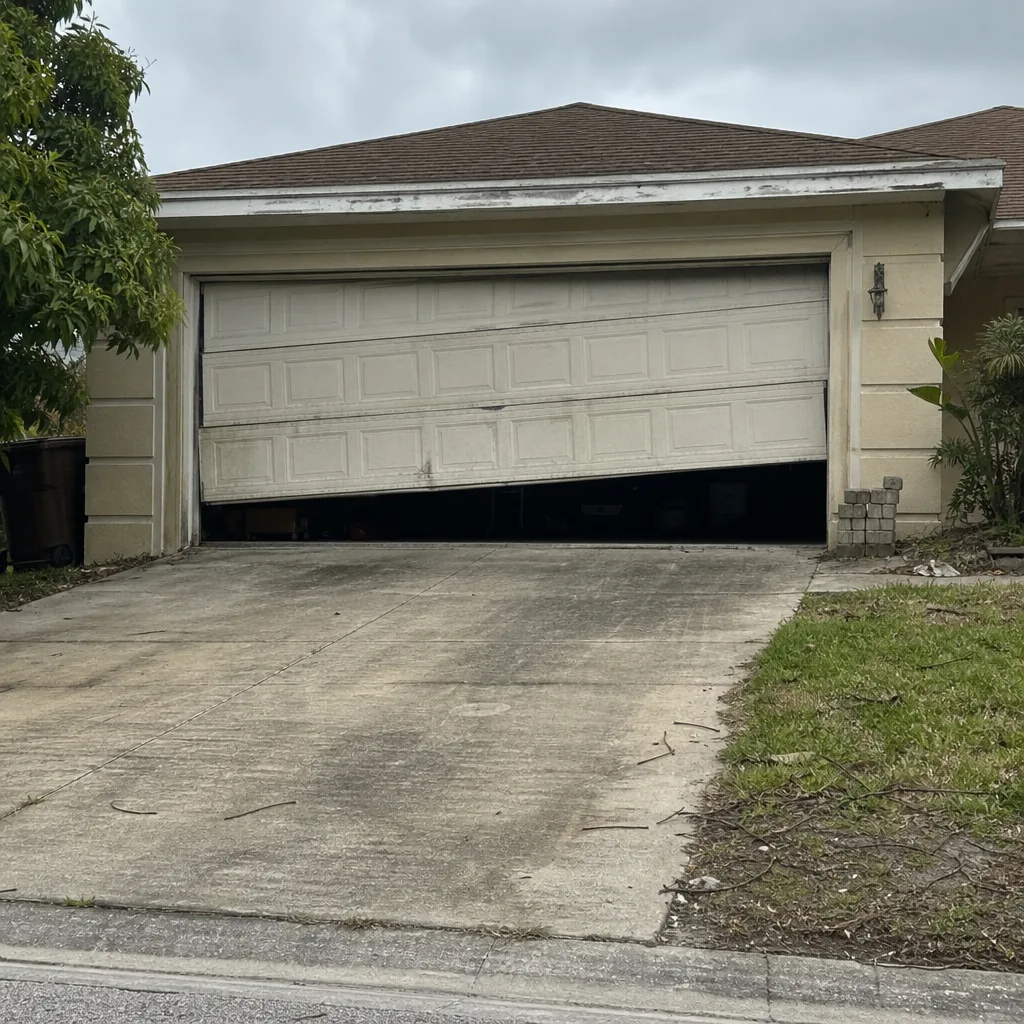 Before
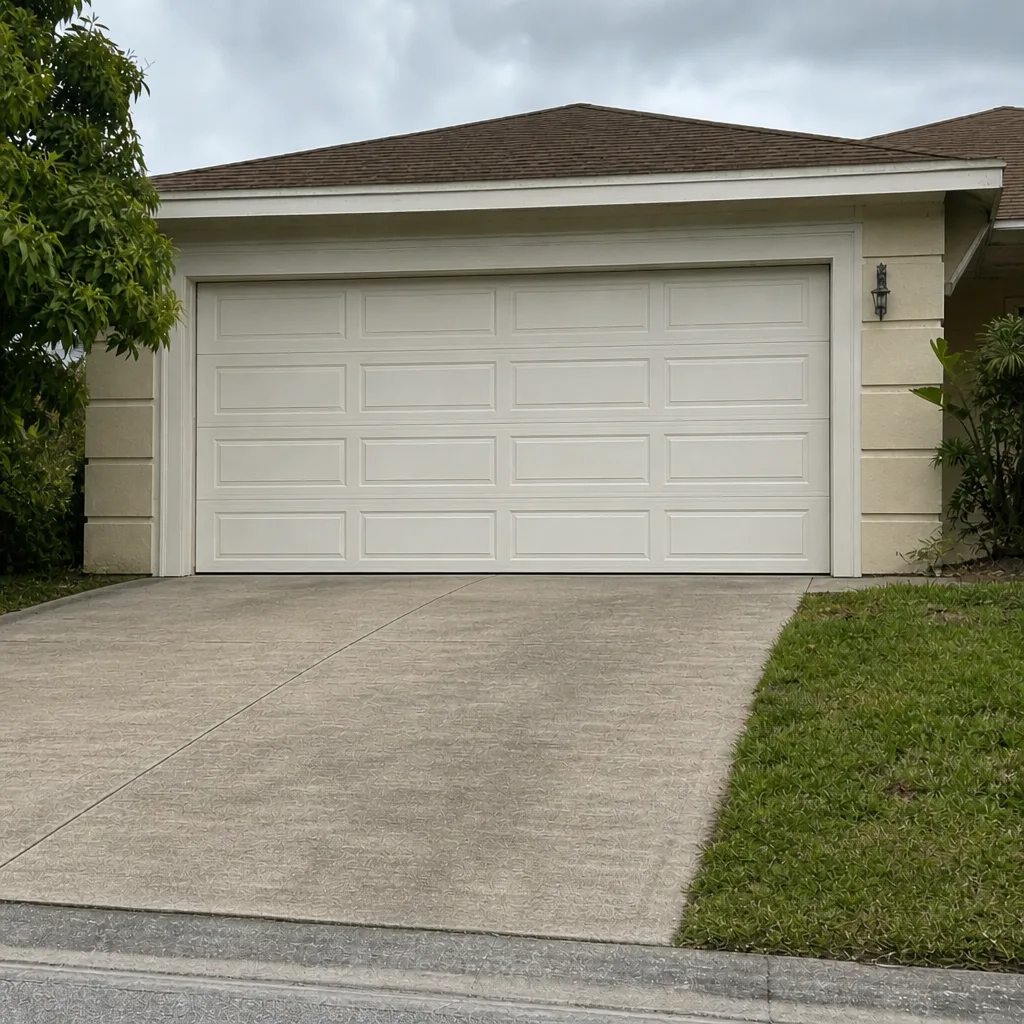 After
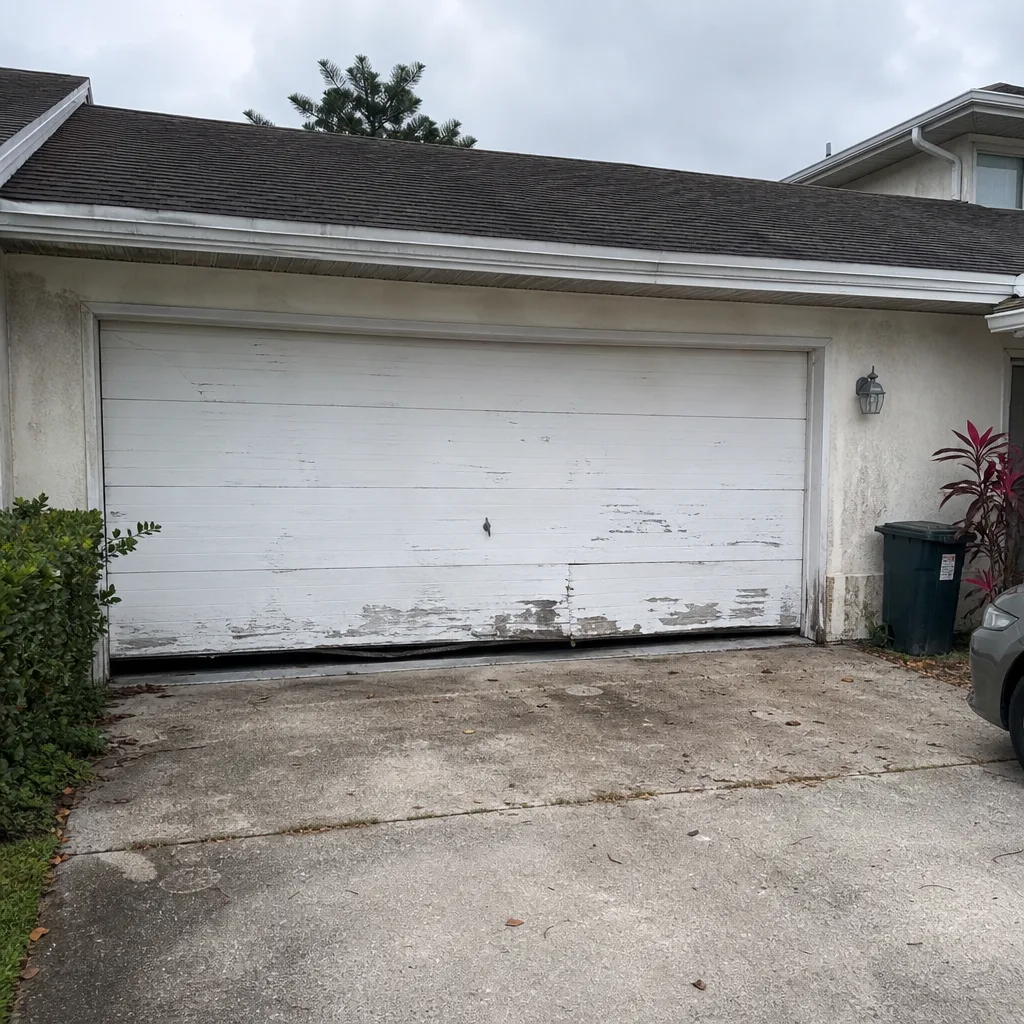 Before
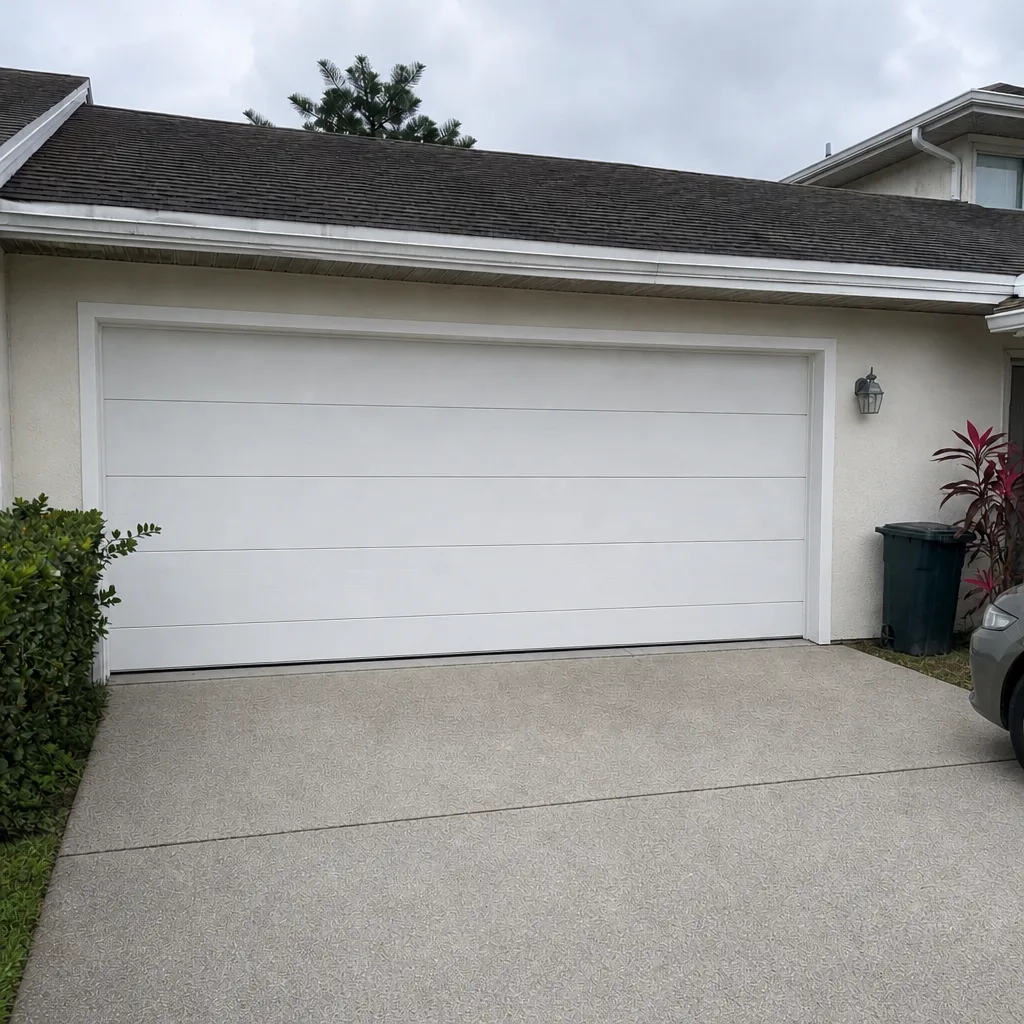 After
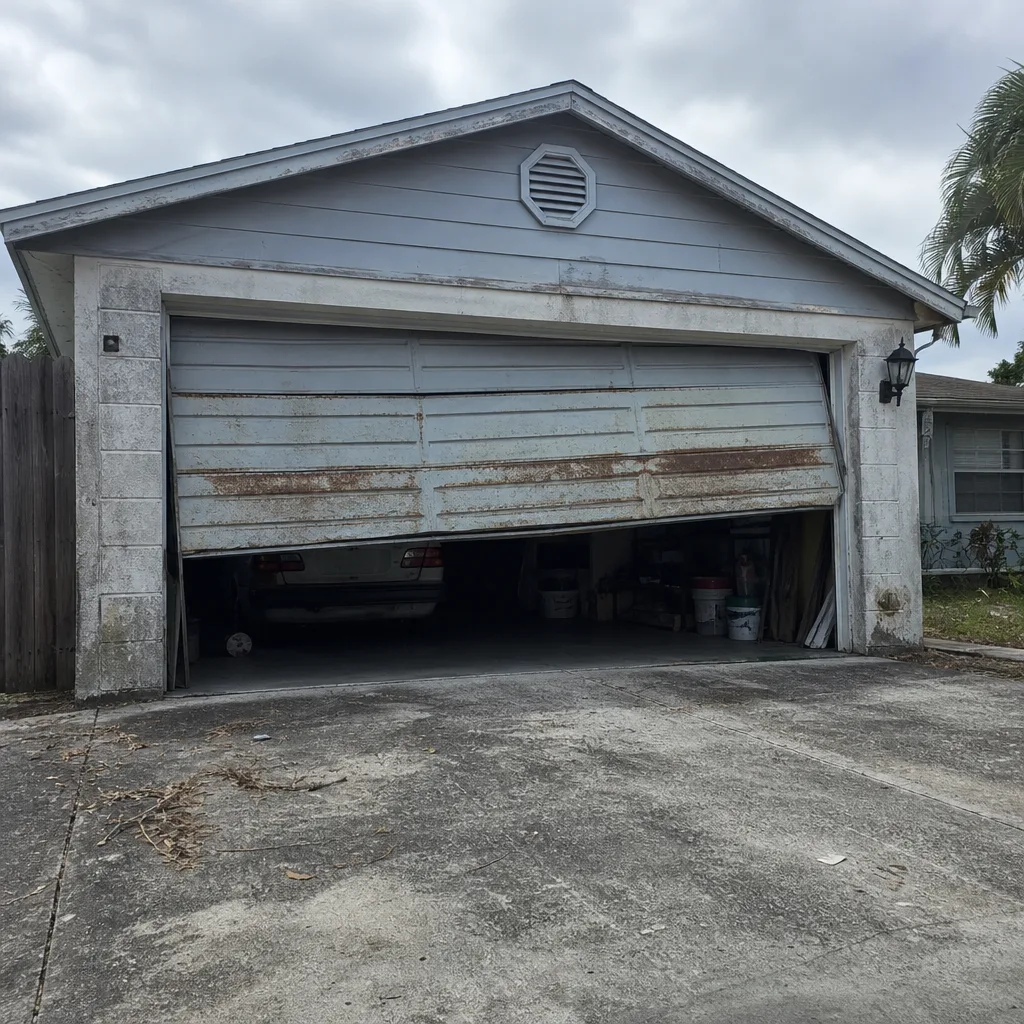 Before
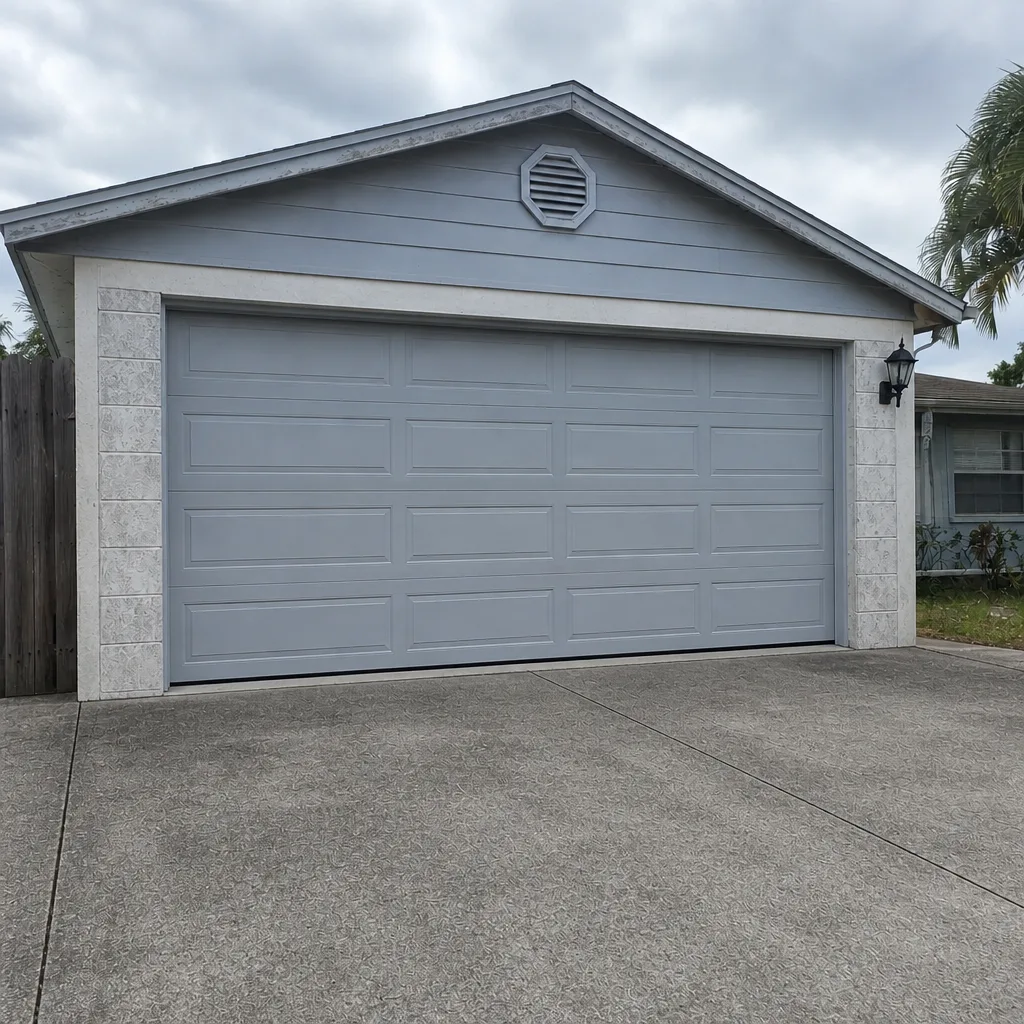 After
When to Call a Professional
Call a professional when the warning sign involves springs, cables, or anything that leaves the door hanging or binding. The two same-day situations are a broken spring and a frayed cable, and neither is safe to operate around. A door that won’t lift, a door that tilts, and a door that reverses unpredictably all justify a call. A slow door with grinding or squealing is worth a scheduled visit; a cosmetic rust spot is worth a note. If you’re unsure which category you’re in, that’s okay. Describe what you’ve seen and heard, and we’ll tell you plainly whether it can wait. Garage Door Repair Riviera Bay offers free estimates in Riviera Bay – call (855) 595-5127. We diagnose first, then recommend, and the price is written and agreed before any work starts.
Frequently Asked Questions
A broken spring is the most serious, and a frayed cable is a close second. Both mean the door is being held up by compromised hardware under tension, and both justify a same-day call rather than a scheduled one. Never operate a door with either condition.
Grinding on a Riviera Bay door usually means a failing bearing or a seized roller, and the humidity here makes bearings lose their grease faster than in a dry climate. It’s a scheduled repair, but don’t let it drag on for weeks – a dry bearing can seize and stall the opener. Call (855) 595-5127 to have someone look at it.
Surface rust wipes off on your thumb with the paint intact underneath, and it’s cosmetic. Structural rust is pitted, streaks orange onto the coil, or shows up on cables and springs, and that’s a repair call. If you’re not sure, have a technician look before you decide.
A squeal from a roller or hinge with the door running smoothly can usually wait for a scheduled visit. Don’t assume, though: if it’s suddenly louder or comes with slow or uneven travel, it’s moving from cosmetic to something that should be looked at sooner.
If the door lifts by hand after you pull the release cord and the opener doesn’t move it, the opener is the problem. If the door is heavy or binds by hand, the door’s mechanics are the issue, and the opener is just the messenger. Either way, we work on major brands like Chamberlain and Genie, so we can diagnose whichever one fails.
Yes. We offer free estimates in Riviera Bay, and emergency garage door service is a genuine part of what we do for broken springs, doors stuck open, and security issues. The price is quoted and agreed before any work starts. Call (855) 595-5127 for an exact quote.
The Bottom Line
Garage door warning signs are mostly quiet. A grind that starts small, a slow lift, a light bloom of rust on a Riviera Bay panel – these are the door telling you what’s coming. The two exceptions to the quiet rule are a broken spring and a frayed cable, and both deserve a same-day call. Everything else sorts into cosmetic or safety-critical using the one-week rule and the monthly checklist, and the sound of the door on every cycle gives you the earliest signal there is. Know which sign you’re looking at, act on it, and you’ll spend less on repairs and less time with a stuck door. If you’d like a trained eye on yours, we’re a call away.
Contact
Have a warning sign you’re not sure about? Call Garage Door Repair Riviera Bay at (855) 595-5127 for a free estimate. We diagnose first, recommend second, and set the written price before any work begins. From a quiet grind to a broken spring, we’ll tell you exactly what’s wrong and what it takes to fix it.
Written by the team at Garage Door Repair Riviera Bay.